Some of the worst wedding gown stains are ones nobody notices on the day. Champagne, white wine, and clear soda dry without a trace, yet the sugars they leave behind slowly oxidize in storage. Months later, those spots surface as yellowish-brown patches, and ordinary dry cleaning solvents cannot dissolve sugar. Red wine gets noticed at the reception, while a drop of prosecco on the hem goes straight into the closet.
Quick Answer:
When removing stains from a wedding dress, blot fresh spills with a dry white cotton cloth and never rub. Let mud dry before touching it. Keep club soda, salt, dish soap, and heat away from the gown. Washable polyester can handle careful spot cleaning at home, but silk, lace, and beading should go to a bridal specialist within days.
What to Do in the First Few Minutes

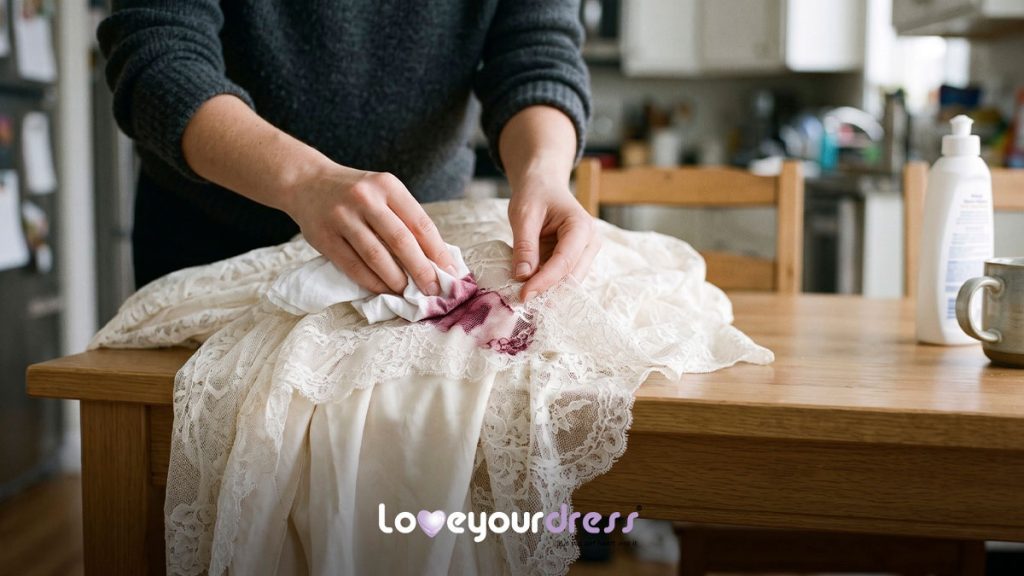
Speed helps only when it stays gentle. Press a dry, undyed cotton or microfibre cloth onto the spill, lift, and repeat with a clean section. Sideways wiping is the habit to break, since friction pushes soil deeper into the yarn and roughens satin and tulle.
Popular fixes that backfire include:
- Club soda, whose minerals and carbonic acid can fix wine tannins in place.
- Table salt, which acts like a fine abrasive on lustrous fabric.
- Baby or makeup wipes, since they spread foundation.
- Any hair dryer, because heat can set a stain for good.
If a clear drink lands on the gown, photograph the spot. Your cleaner can then find a stain that may stay invisible until it yellows.
Handling the Most Common Wedding Day Stains
No single wedding dress stain remover handles every mark, because wine, mud, grass, and makeup behave differently.
How to Remove Wine Stains from a Wedding Dress
Wine combines tannins, plant pigments, and sugars. Blot firmly with white cotton until no more colour transfers. On washable synthetics, dab on one part neutral detergent mixed with 20 parts cool distilled water, then blot again. For silk and rayon, stop at blotting and call a cleaner, since water can leave rings.
How to Get Mud Out of a Wedding Dress
Leave it alone while it is wet. Brushing damp mud drives fine grit into the weave, where it can saw through delicate lace threads. Once the hem dries in open air, crumble the crust between your fingertips and vacuum the dust through netting.
How to Get Grass Stains Out of a Wedding Dress
Grass deposits chlorophyll and plant enzymes. Alkaline cleaners and hot water bond that pigment into a brown mark. Undyed polyester tolerates a little 99% isopropyl alcohol, dabbed onto the reverse side to lift the green. Dyed or tinted silk is another story, since alcohol can make bridal dyes bleed.
Other spills need their own first move.
| Stain | First Move | Avoid |
|---|---|---|
| Makeup | Lift excess with a blunt plastic edge | Wipes, rubbing, water |
| Cooking oil | Dust with cornstarch, wait 15 minutes, brush away | Hot water, coloured dish soap |
| Sweat | Blot inside the bodice, then hang to air | Steaming or pressing |
| Road salt | Pat the hem dry with microfibre | Heating vents, rubbing |
| Champagne | Blot and photograph the area | Assuming it disappeared |
Your Gown’s Fabric Sets the Limits
Silk is the fabric most likely to punish a home attempt. In its notes on textile care, the Canadian Conservation Institute recommends against washing silk.1 Water also pulls sizing to the edge of a damp patch, where it can dry into a permanent dark ring. Polyester tolerates water better, though the Drycleaning & Laundry Institute notes that synthetics like polyester can hold on to oily stains after washing.2
Beading and appliqués bring separate risks. Many lace motifs are attached with glue that softens under heat and dissolves in dry cleaning solvents. Faux pearls can lose their lustrous coating to household alcohol. With silk, lace, or beading involved, specialist wedding dress cleaning is the safer choice.
Mistakes That Make Stains Permanent
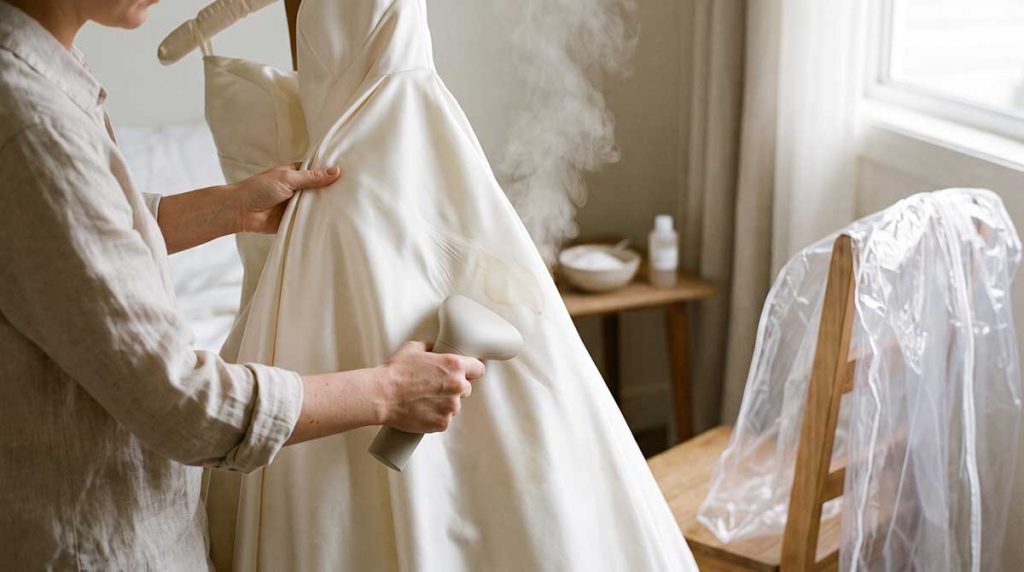
Heat does the most damage. A steamer, iron, or hair dryer over an untreated mark can bond blood and sweat proteins to fibre above roughly 38°C and caramelize hidden sugar within seconds. Layering pantry remedies creates fresh problems. Vinegar and baking soda cancel each other out and dry into stiff crystals inside the yarn.
Machine washing deserves a firm no, since drum rotation tears openwork lace, shreds tulle, and melts adhesives. Plastic garment bags from dry cleaners are another hazard, and federal conservation guidance notes that they block air circulation and let moisture build up.3 Gowns kept for years fare better with professional bridal dress preservation, which uses archival boxes and tissue made without acid.
When Professional Wedding Dress Stain Removal Makes Sense
Certain marks are beyond a cotton swab. Silk, layered tulle, heavy beading, large spills, and old yellowing all point toward professional wedding dress stain removal. Specialists inspect gowns under ultraviolet light, which makes hidden sugar and sweat residue glow. Each stain then receives a spotting agent matched to tannins, proteins, or grease.
Weather plays a role too. Anyone needing wedding dress stain removal in Toronto after a winter ceremony is often dealing with road salt on the hem. Left untreated, those salts draw moisture into the fibres and dry into stiff, yellowed tide marks.
Final Thoughts
Most of what you need to know about how to get stains out of a wedding dress comes down to restraint. Blot, let mud dry, keep heat away, and skip the kitchen experiments. Clear spills deserve the same attention as red wine, given how quietly sugar stains develop. The sooner a delicate gown reaches a specialist, the more options that cleaner has to work with.
How We Can Help
At our Etobicoke facility, Love Your Dress cleans wedding gowns with biodegradable solvents and hand stain treatment matched to each fabric. Every gown is inspected and spot treated first, and free pickup and delivery is available across Southern Ontario on orders over $75.
Send us a few details about your stain and get a free quote for your gown today.
References
- “Washing Non-coloured Textiles.” Canadian Conservation Institute, Government of Canada, www.canada.ca/en/conservation-institute/services/conservation-preservation-publications/canadian-conservation-institute-notes/washing-non-coloured-textiles.html.
- “Benefits of Drycleaning A to Z.” Drycleaning & Laundry Institute International, dlionline.org/benefits-of-drycleaning-a-to-z/.
- “Basic Care: Textiles.” Canadian Conservation Institute, Government of Canada, www.canada.ca/en/conservation-institute/services/care-objects/textiles-costumes/basic-care-textiles.html.