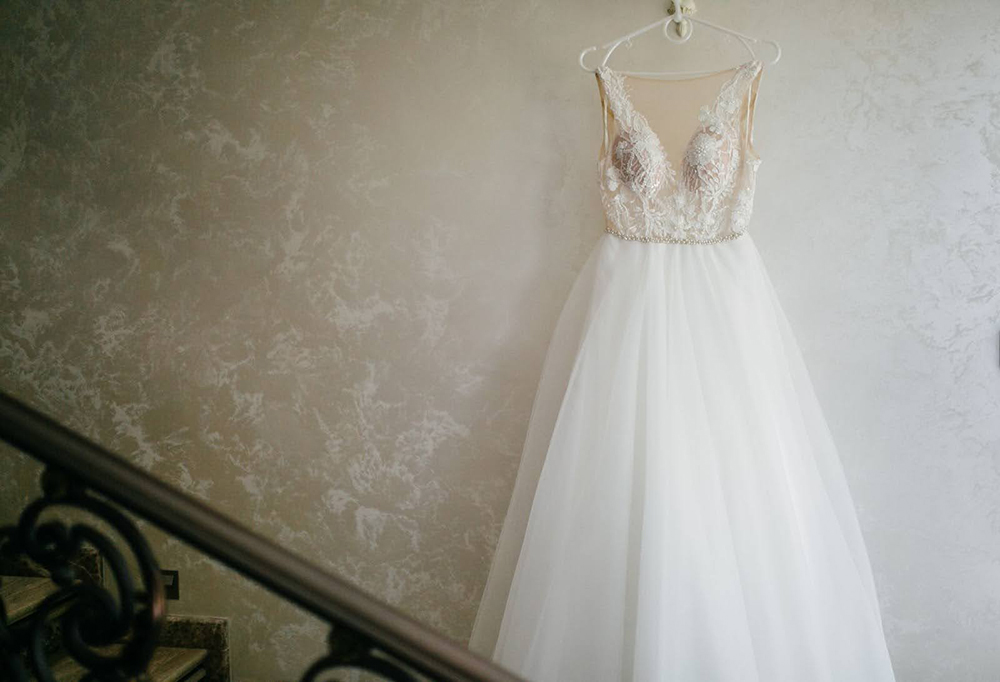

A wedding in Toronto can exceed $55,000, and the gown often remains one of the most carefully chosen pieces from the day. Pricing really depends on fabric, soil level, construction, and storage materials. A simple gown with light wear needs a different level of care than silk satin, heavy beadwork, or a long train marked by grass, pavement, makeup, and reception spills. If the gown has sentimental value, resale potential, or future family use in mind, preservation deserves a separate line in your post-wedding budget. It also keeps decisions open for future wear, display, donation, heirloom storage, sale, or careful restoration years later.
How Much Does Wedding Dress Preservation Cost?
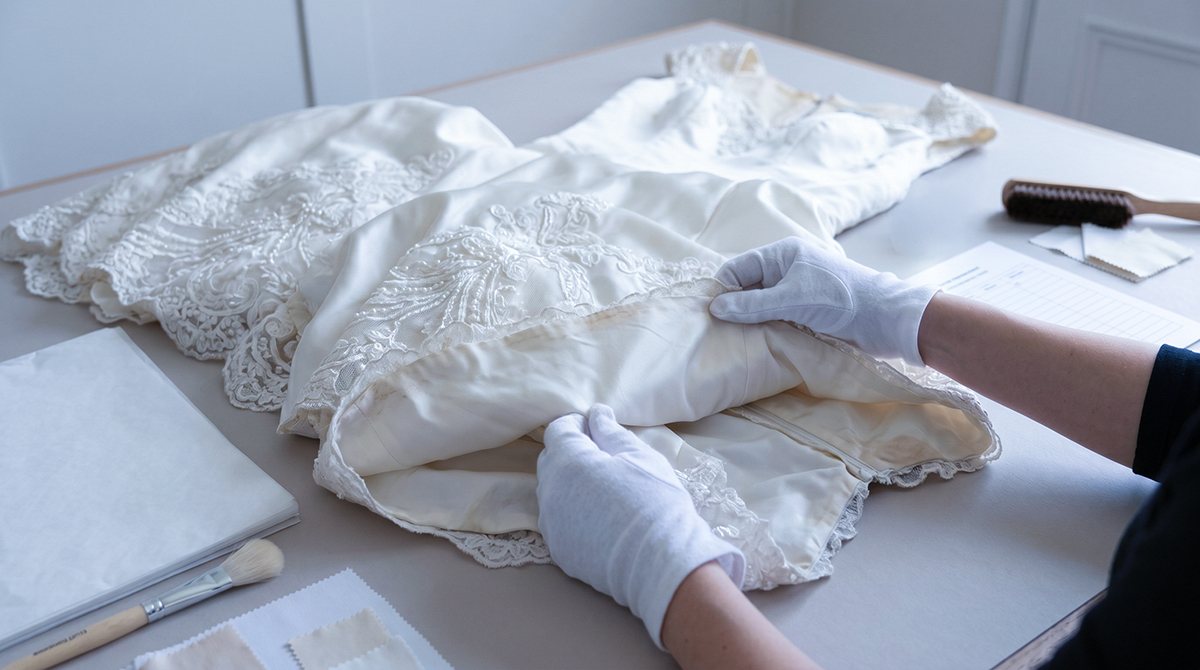
The typical professional wedding dress preservation cost reflects labour first. A gown is not handled like a cocktail dress or winter coat. Technicians inspect the bodice, hem, lining, bustle points, and embellishments before cleaning. Sugar from champagne, cake, or soda can dry clear, then turn yellow or brown months later. Body oils around the neckline can also oxidize and stiffen the fabric.
Prices rise for long trains, silk satin, heavy beadwork, outdoor mud, grass staining, or trims that need hand protection. A basic gown may need standard solvent cleaning and boxing. A couture gown may require testing, hand cleaning, stain mapping, and careful finishing before it enters an archival wedding dress box.
Average Cost Of Wedding Dress Preservation In Canada

The average cost sits in a wide range because gowns vary so much. Toronto and Vancouver providers often carry higher operating costs, which can push standard preservation toward the upper end.
| Service Type | Typical Cost In CAD | Best Fit |
| Budget or Mail-In Kit | $250 To $350 | Simple gowns with light staining |
| Standard Professional Care | $400 To $700 | Lace, moderate trains, silk blends |
| Premium Boutique Care | $700 To $1,200 | Couture gowns, heavy beading, outdoor soil |
| Restoration Services | $450 To $900 Plus | Older gowns with yellowing |
These ranges help with planning, but the most accurate number comes from an inspection. Photos can help, though an in-person review is better when the gown has delicate fabric, hidden staining, or detailed construction.
Wedding Dress Cleaning And Preservation’s Cost Factors
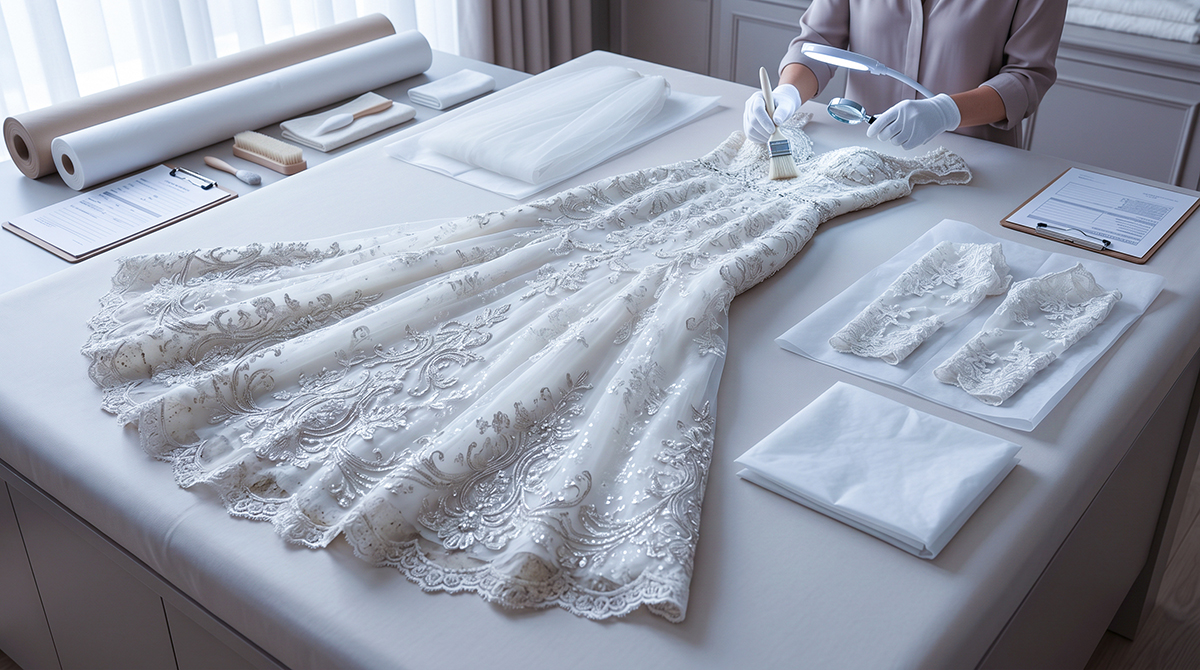
The Canadian Conservation Institute notes that delicate textile cleaning may require manual machine operation, limited agitation, and solvent control, which affects pricing.1 Use the anchor text “museum textile dry cleaning standards” for that source.
Cost usually increases when:
- The hem has asphalt, mud, grass, or grit from an outdoor ceremony.
- Beads, sequins, metallic threads, or appliqués need testing or protection.
- Silk, cotton, or fragile blends need gentler cleaning chemistry.
- Invisible sugar stains need pre-treatment before boxing.
- The train, veil, overskirt, or detachable sleeves add handling time.
A quote should identify cleaning, preservation materials, insurance, timing, and restoration work. Vague pricing can lead to surprise charges after drop off.
How Much Is Wedding Dress Preservation After A Wedding?

Timing here is important. Specialists commonly recommend bringing the gown in within two to six weeks. Waiting allows sugar, protein, and oil-based stains to bond more firmly with the fibres. Older stains can still be treated, but the work is often slower, costlier, and less predictable.
Do not store the gown in a plastic garment bag while you decide. Plastic can trap humidity and may release chemicals over time. A breathable cloth cover in a dark closet is safer for short storage. Keep the dress away from basements, attics, sunny rooms, kitchens, and garages. Canadian homes swing between dry winter air and humid summer conditions.
Professional Wedding Dress Preservation Vs. Regular Cleaning Cost

Professional wedding dress preservation adds inspection, stain treatment, archival folding, acid-free tissue, and storage that reduces light, dust, acidity, and moisture exposure.
A preservation quote often includes:
- Fabric and embellishment testing before cleaning begins.
- Spot treatment for wine, makeup, cake, body oil, grass, and soil.
- Archival tissue placed between folds to reduce creasing and acid transfer.
- Boxing that allows limited breathability instead of sealing the gown in plastic.
- A guarantee or inspection policy, by service level.
For many brides, the added cost protects resale value, family reuse, resale, or donation potential. A preserved gown gives a future cleaner or restorer a stronger starting point.
Wedding Dress Preservation Services: Pricing And Storage Choices
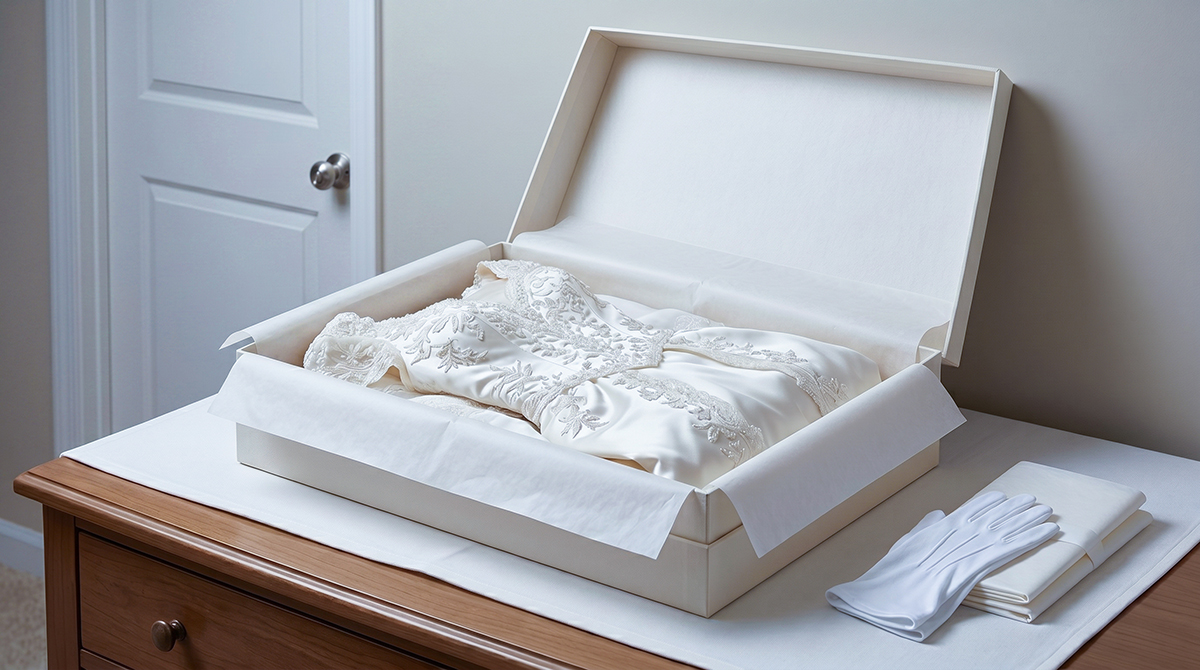
Wedding dress preservation pricing should account for storage quality. Standard cardboard contains lignin, which can release acids. Acid-free and lignin-free materials reduce the chance of yellowing, while buffered or unbuffered tissue may be selected depending on the fibre.
The Canadian Conservation Institute identifies light, pollutants, temperature, and relative humidity as risks for textiles in storage.2 Use the anchor text “basic textile care guidance” for that source. Store the finished box in an interior closet with moderate temperature. A basement may be damp. A bright room can expose fabric to light.
A Bridal Dress’ Preservation Cost And The Value Of Inspection
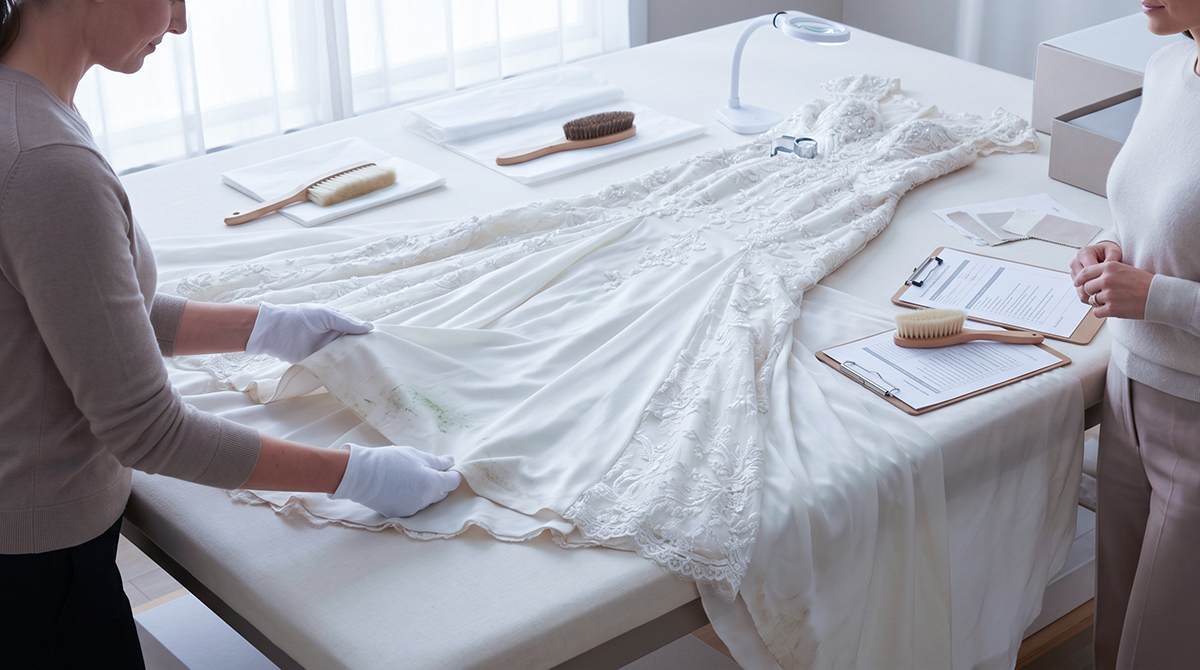
The cost of preserving a bridal dress becomes easier to judge when the provider explains the work. Ask how stains are identified, whether fresh solvent is used, what type of tissue and box are supplied, and beadwork testing. A provider should be able to explain cleaning, preservation, and restoration without pressure.
The lowest price can suit a simple polyester gown with minimal staining. A higher price is reasonable for silk, couture construction, outdoor soil, or hand-cleaned beadwork. A dress worn through rain, grass, dinner, dancing, and travel has lived a long day. Preservation pricing should reflect that condition, not a flat label attached to the word bridal.
For a clear price based on your gown, photos, stains, and storage goals, get a quote from Love Your Dress today.
References
- Canadian Conservation Institute. “Commercial Dry Cleaning of Museum Textiles – Canadian Conservation Institute (CCI) Notes 13/13.” Canada.ca, 22 Feb. 2019, www.canada.ca/en/conservation-institute/services/conservation-preservation-publications/canadian-conservation-institute-notes/commercial-dry-cleaning-museum-textiles.html.
- Canadian Conservation Institute. “Basic Care – Textiles.” Canada.ca, 14 Nov. 2018, www.canada.ca/en/conservation-institute/services/care-objects/textiles-costumes/basic-care-textiles.html.