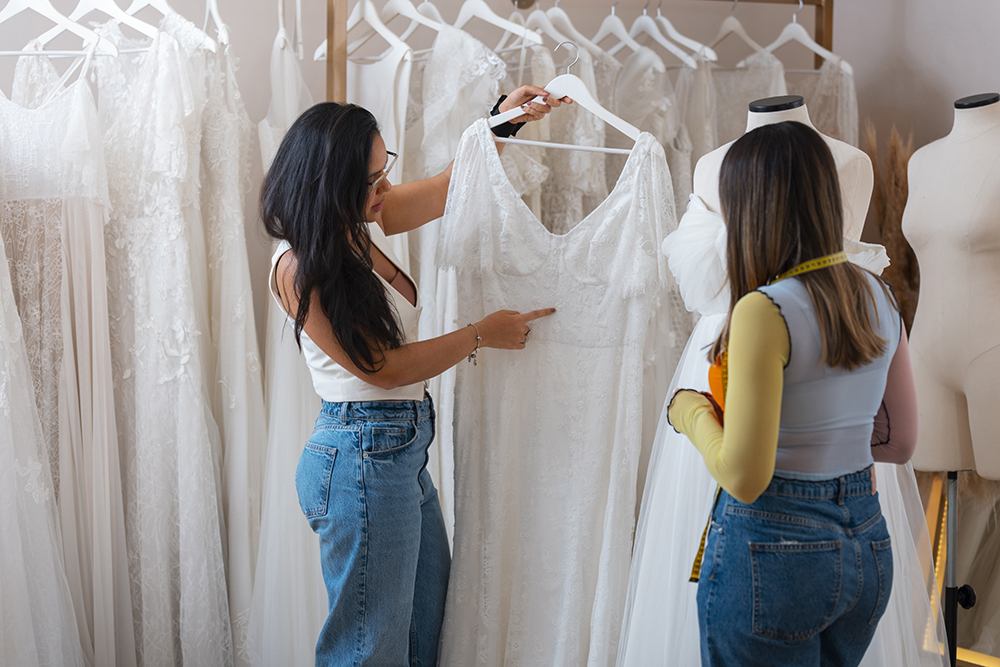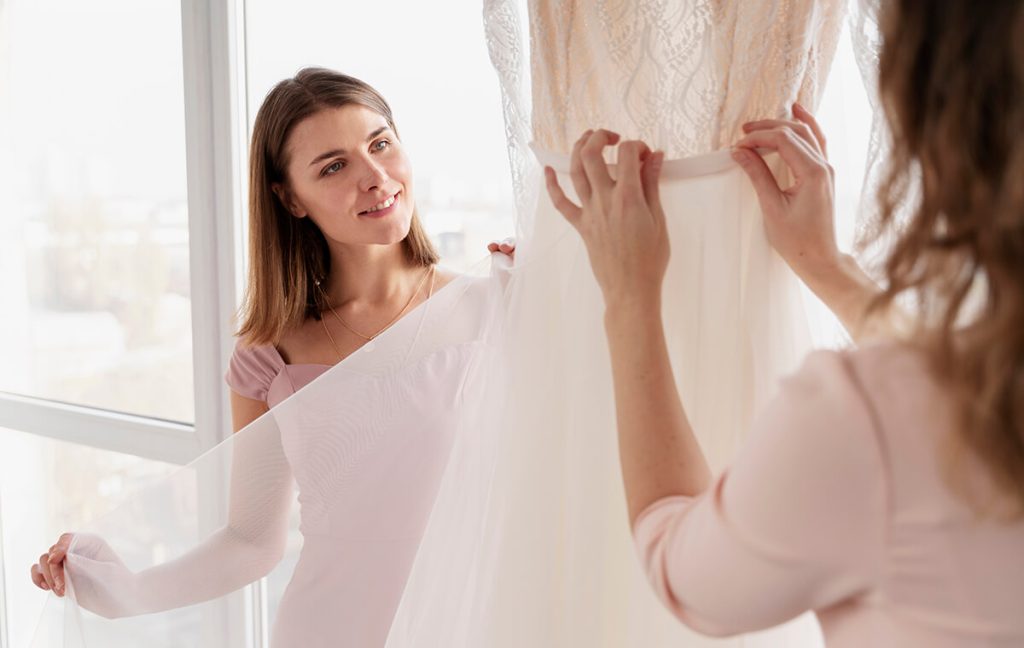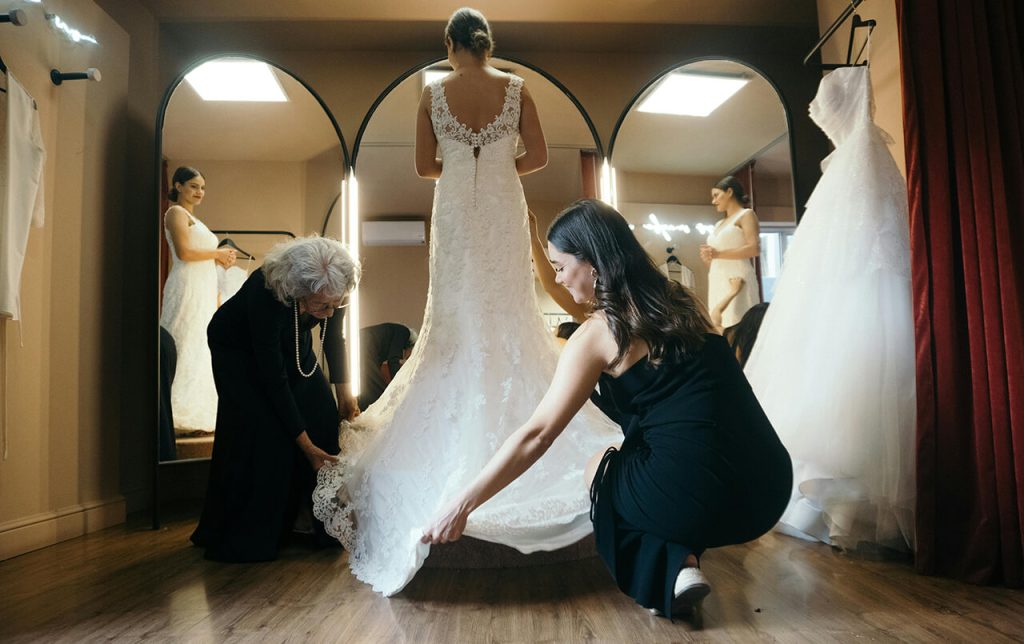
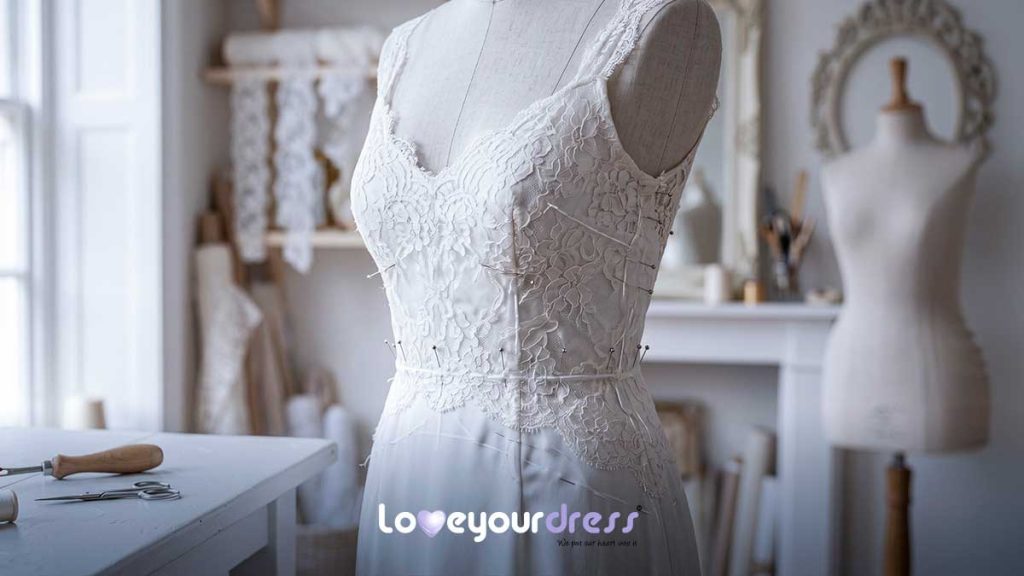
For most brides, the safest answer is 8 to 12 weeks from the first fitting to final pickup. A simple hem or strap change may take less time, but a bridal gown is rarely a quick alteration. Fabric, beadwork, lining, boning, train length, and appointment availability all affect the schedule.
Based on Canadian wedding season data, about 80% of weddings take place between May and October, with September accounting for about 20% of weddings.1 Tailors are busiest when summer and fall gowns arrive, so brides who wait too long may have fewer appointment options.
The best plan is to book early, start fittings at the right time, and bring the same shoes and undergarments to every appointment.
Wedding Dress Alteration Timeline
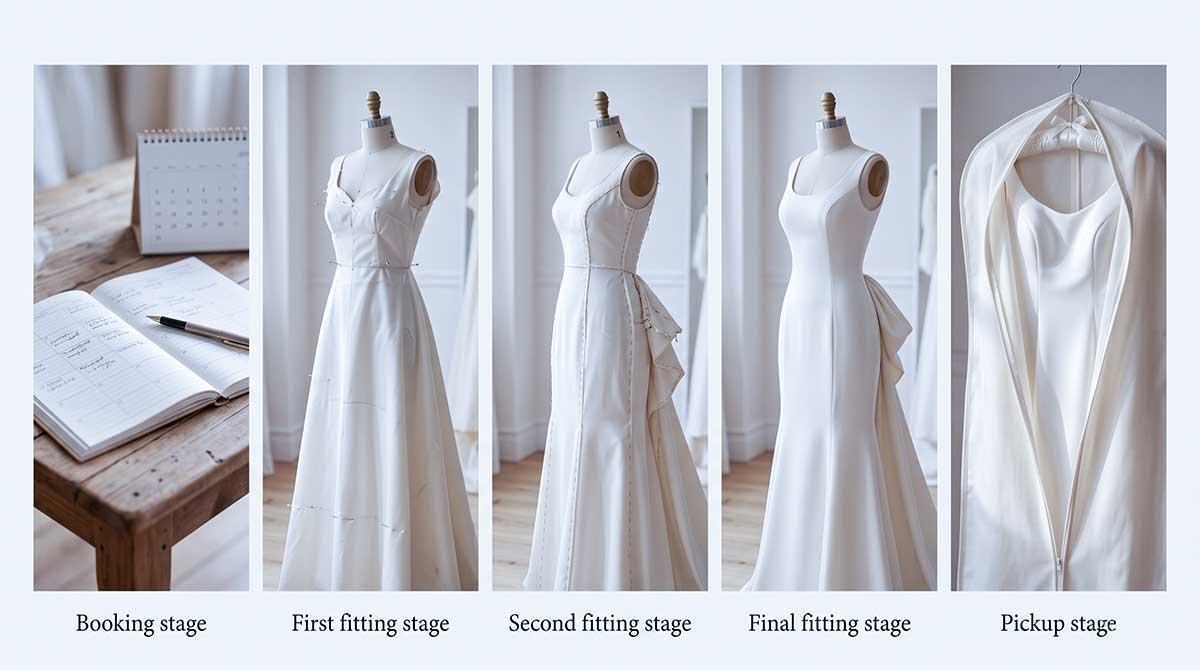
A standard timeline gives your tailor enough time to pin, baste, adjust, finish, steam, and press the gown. Most brides should plan for three fittings across 8 to 12 weeks.
| Stage | Best Timing | What Usually Happens |
| Book The Tailor | 8 To 12 Months Before | Reserve a place in the schedule, especially for spring, summer, and fall weddings. |
| First Fitting | 8 To 12 Weeks Before | Pin the bodice, waist, hips, hem, straps, and train. Discuss the bustle and any design changes. |
| Second Fitting | 4 To 6 Weeks Before | Review basted seams, refine the shape, check the hem, and build or adjust the bustle. |
| Final Fitting | 1 To 2 Weeks Before | Confirm comfort, movement, length, and bustle instructions. |
| Pickup | Wedding Week | Steam, press, pack, and prepare the gown for transport. |
This schedule leaves room for small corrections. A bodice may need tighter contouring after the first round of stitching. A bustle may need stronger points once the train is lifted and tested. Those adjustments are normal in bridal tailoring.
How Far In Advance To Alter A Wedding Dress
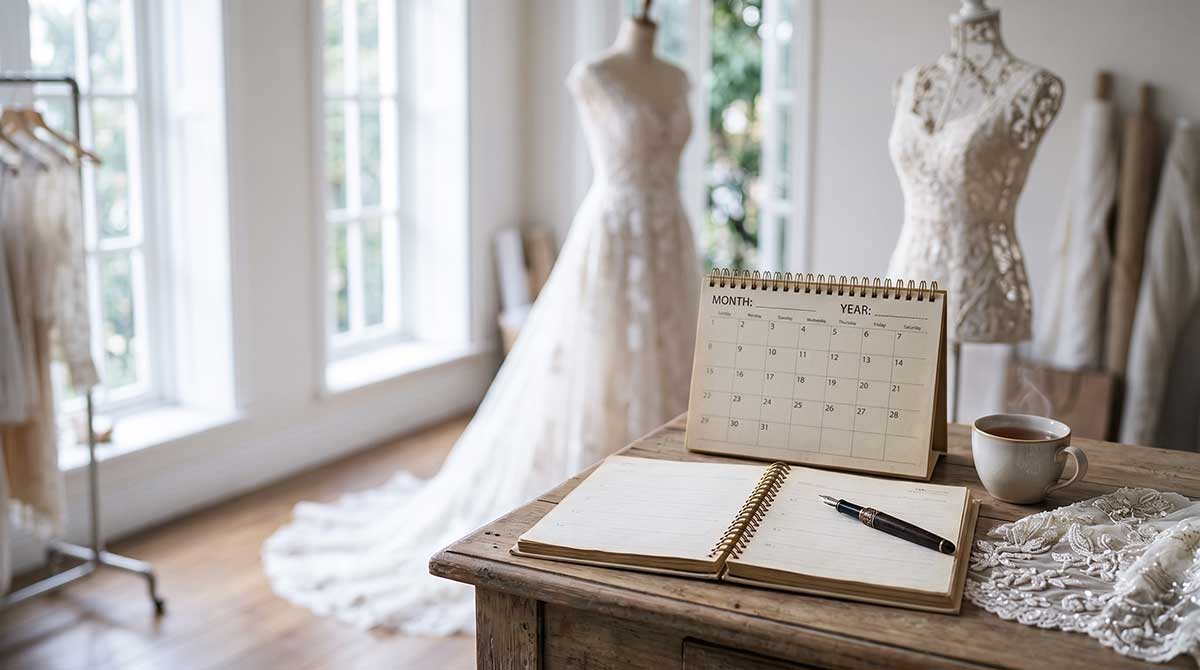
Fitting work should usually begin 8 to 12 weeks before the wedding. The booking should happen much earlier. If your wedding falls between May and October, contact a bridal tailor as soon as your gown is purchased or ordered.
Canadian marriage statistics place the 2024 mean age of first marriage at 31.5 years2, which often means couples are making specific, detail driven choices for the wedding wardrobe. A dress that technically zips is not always ceremony ready. It still needs to fit your posture, shoes, undergarments, and movement.
A short timeline can still work if the gown is simple and already close to your size. A beaded lace dress, corseted bodice, full skirt, or long train needs more time. If the wedding is less than six weeks away, ask about availability right away and expect rush pricing.
How Many Fittings For Wedding Dress Alterations
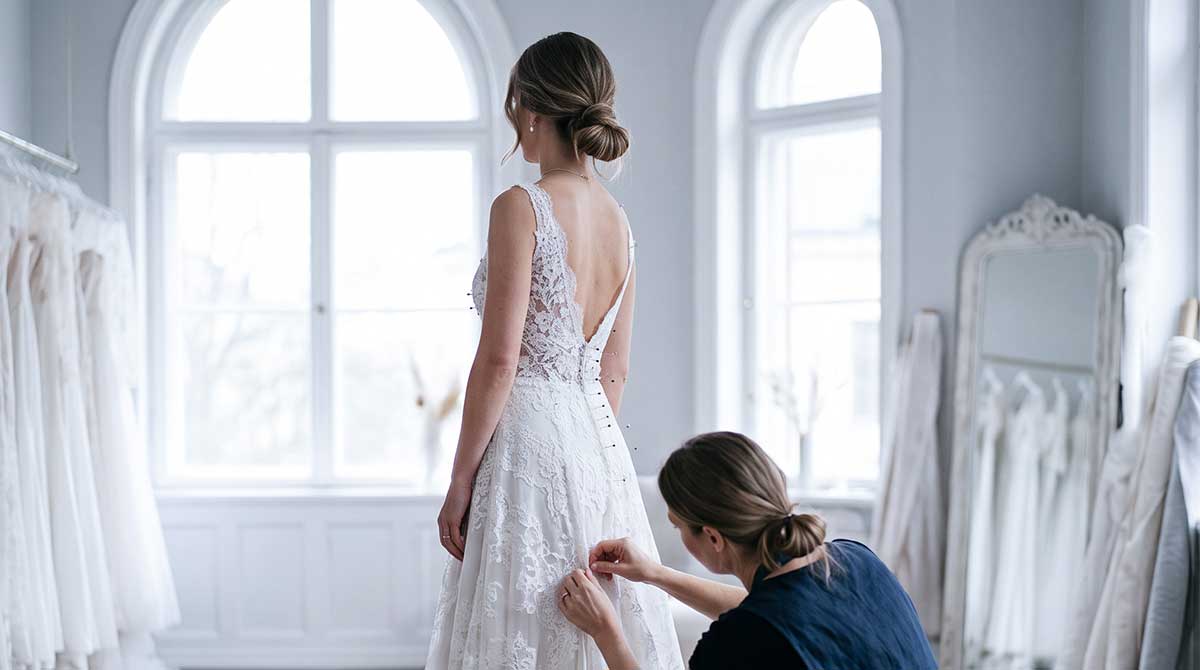
Most wedding dresses need three fittings. Some need two. Complex gowns can need four or more, especially when the dress has heavy beadwork, lace appliqué, a corset conversion, or major resizing.
- First Fitting: The tailor studies how the gown sits on your body, pins the main areas, marks the hem, and discusses the bustle.
- Second Fitting: You try the adjusted shape before everything is permanently finished. Small corrections are easier at this point.
- Final Fitting: The completed gown is checked while you walk, sit, turn, and practise the bustle with the person helping you on the wedding day.
The spacing between appointments is useful. Fabric needs time to settle after seams are adjusted, and the tailor needs time for hand sewing, pressing, and refinements.
Wedding Dress Hemming Time
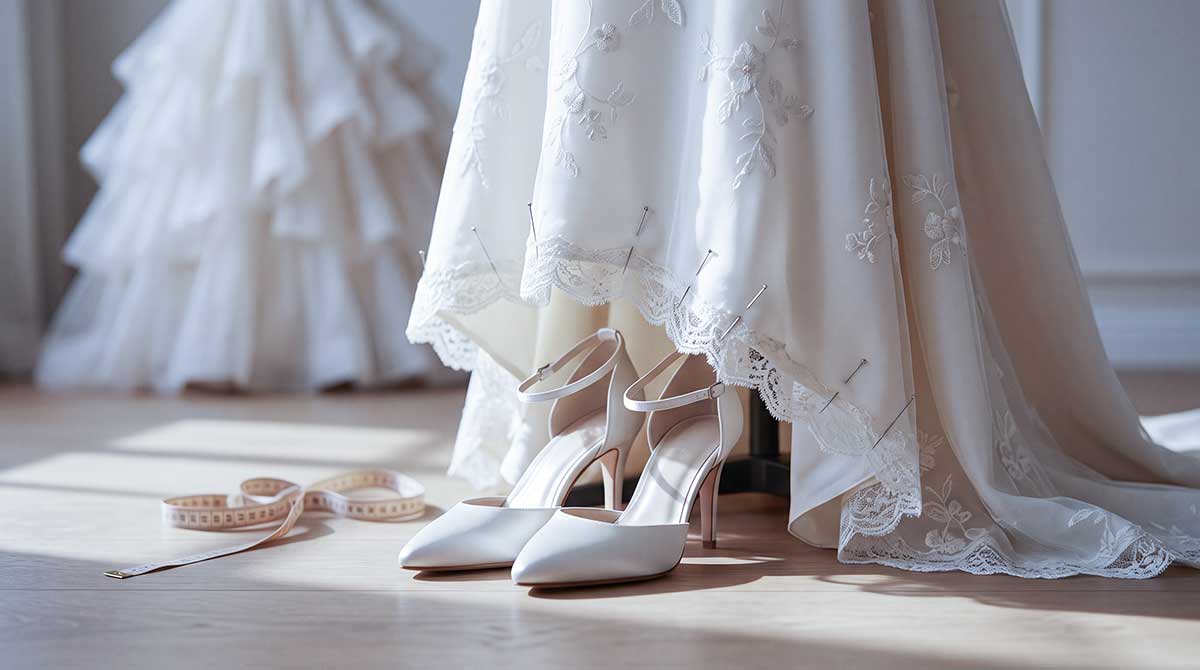
Hemming time is usually 1 to 2 weeks for a simple gown, but the full alteration process still takes longer because the hem depends on the bodice. If the bodice is loose, the gown sits lower. Once the bodice is tightened, the skirt can rise. Cutting the hem before the bodice is stable can leave the final length wrong.
Shoes are also part of the measurement. A change from heels to flats can make the gown drag. A different platform height can affect the front, sides, and train. Bring the exact wedding shoes to every fitting, along with the same bra, cups, corset, or shapewear you plan to wear on the day.
What Can Make Alterations Take Longer
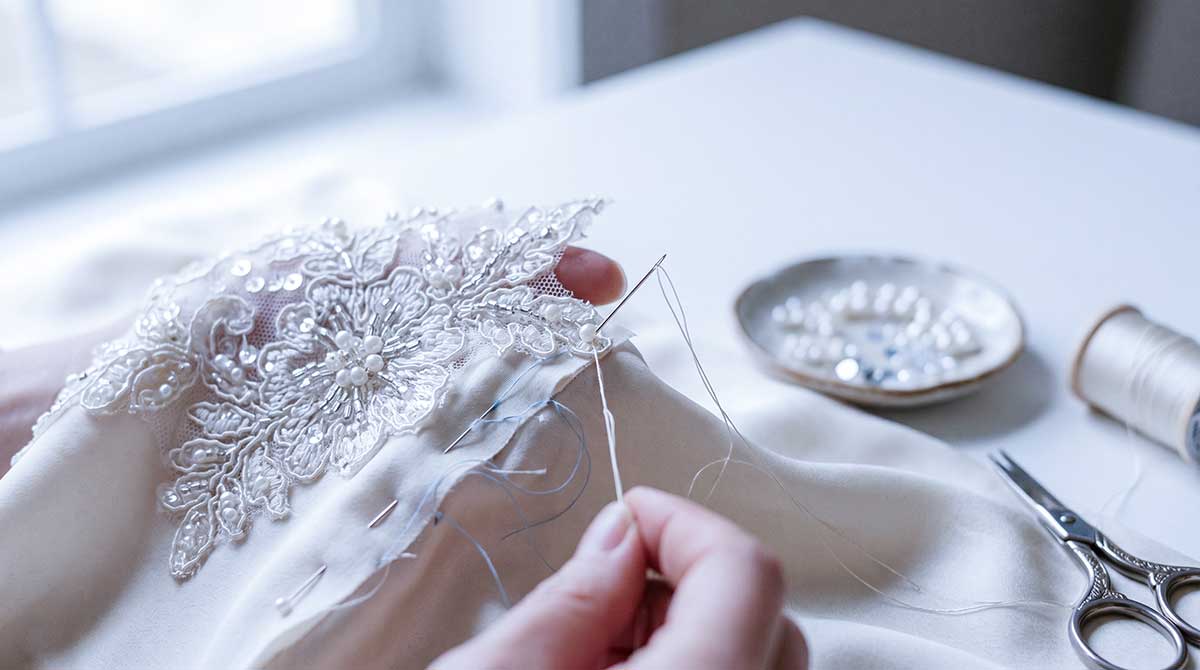
Some dresses need more labour because the tailor has to protect both fit and design. Delays often come from structure, embellishment, or late changes.
- Beading and sequins may need to be removed by hand, then sewn back after seams are adjusted.
- Lace appliqués often need to be lifted, repositioned, and stitched invisibly over the new seam line.
- A corset back, sleeve addition, neckline change, or major size correction can add several weeks.
- A full train needs a secure bustle that lifts the fabric clear of the floor for dancing.
- Missed fittings can compress the remaining schedule and limit the tailor’s options.
Avoid changing shoes, undergarments, or major design details once alterations begin. Those choices affect measurements more than many brides expect.
What To Bring To Wedding Dress Alteration Appointments
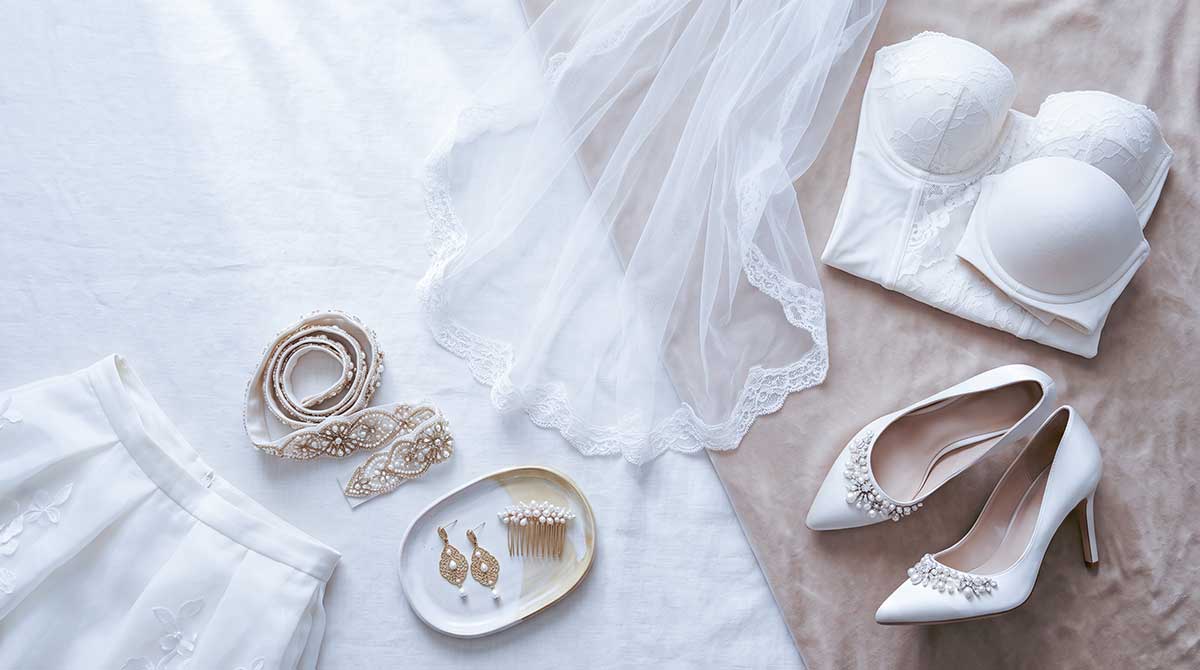
Alteration appointments are technical sessions, so bring the items that influence fit. One trusted person is enough for most fittings. A large group can slow decisions and distract from the details the tailor needs to check.
Bring your wedding shoes, bridal undergarments, veil, overskirt, and any accessories that affect length, shoulder placement, or movement. At the final fitting, bring the person who will fasten your bustle. They should see how the hooks, loops, buttons, or ribbons work before the wedding day.
Move naturally during every fitting. Sit down, raise your arms, turn, walk, and practise a few dance steps. A gown should feel secure during photos, hugs, dinner, and the reception.
Rush Alterations And Short Timelines
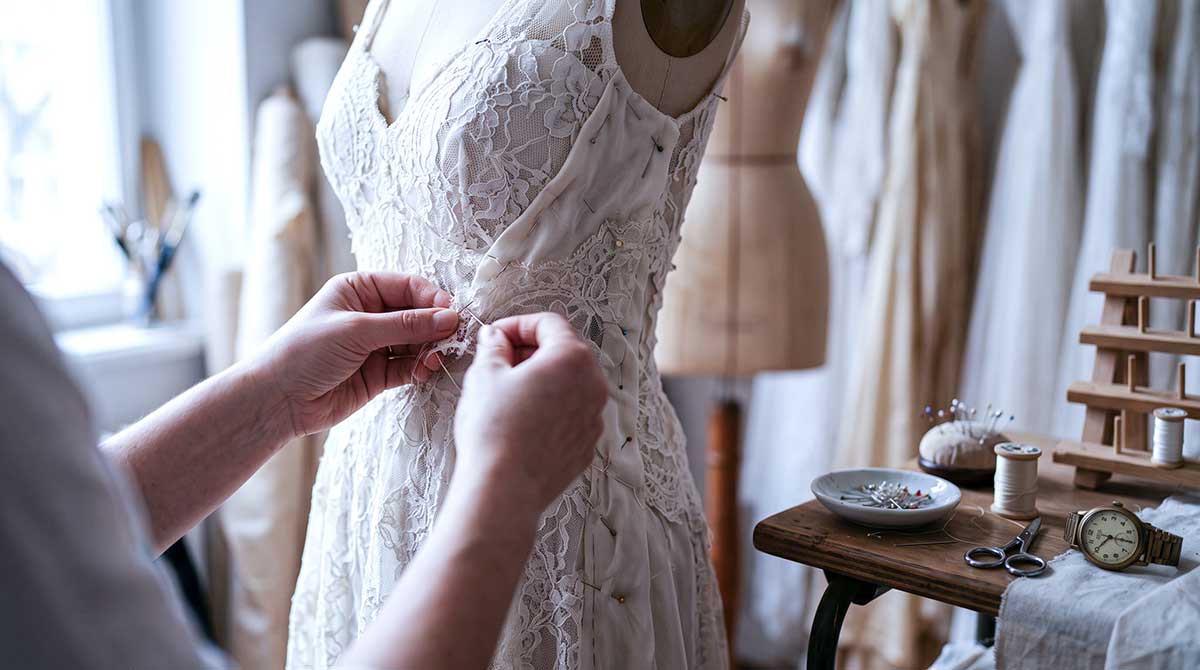
Rush alterations may be possible, but they are not ideal for every dress. Wedding dress alterations brought in less than six weeks before the wedding or travel date may be treated as rush work, especially during peak season.
A simple strap adjustment or minor take-in can often be completed faster than a lace hem, corset conversion, or beaded bodice adjustment. Same-day bridal alterations are usually unrealistic because gowns are built in layers. The work can involve deconstruction, pinning, basting, hand sewing, pressing, and another fit check.
When time is tight, focus on wearability first. Bodice security, hem safety, strap support, and bustle function should come before decorative changes.
After The Final Fitting
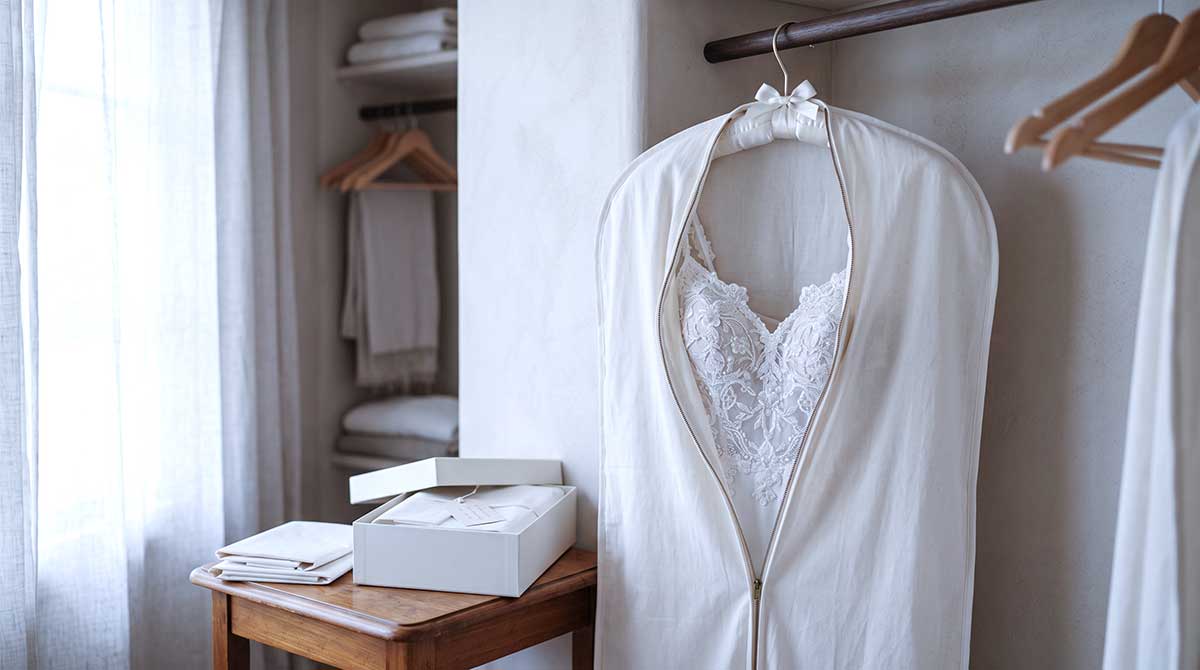
Once the gown is finished, keep it in a breathable garment bag before the wedding. Store it somewhere clean, dry, and away from direct sunlight. Avoid plastic for long storage because trapped moisture can affect delicate fabrics.
After the celebration, stains from makeup, sweat, food, grass, and floor contact should be handled quickly. Professional wedding dress preservation helps protect the gown after wear, especially when it has lace, beadwork, layered skirts, or delicate fabric.
How To Store The Dress After Cleaning
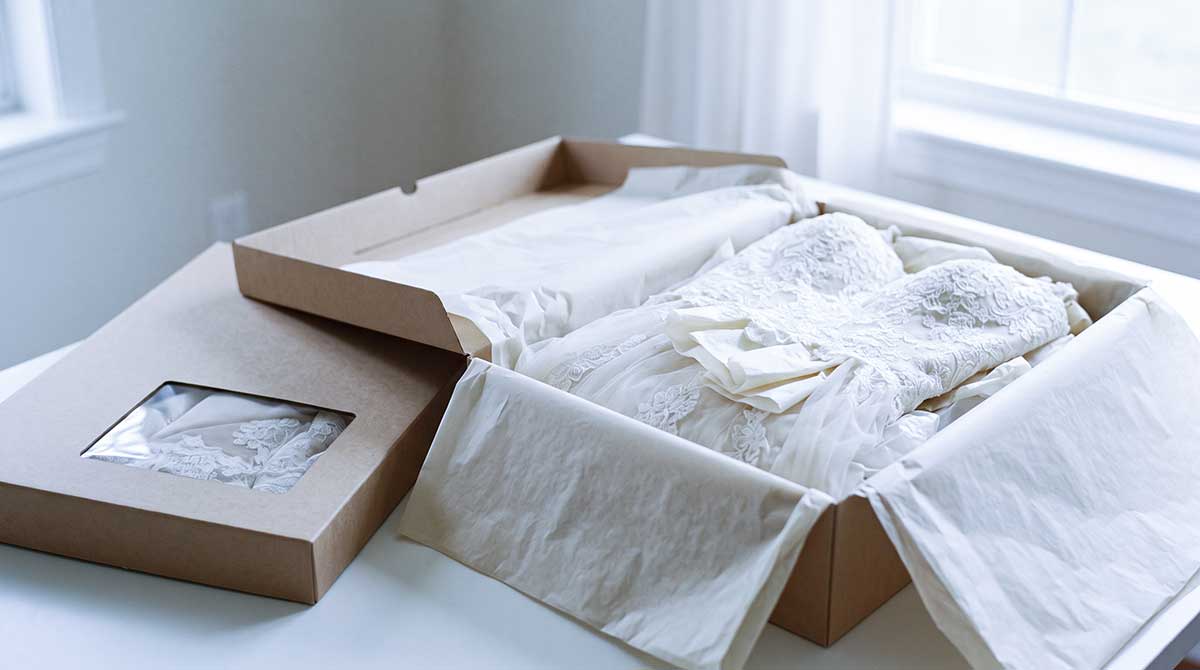
Once the gown has been cleaned and prepared for long-term storage, it should not stay compressed in a regular closet bag. Fabric needs support, and folds should be protected so the dress does not sit under unnecessary strain for years.
A proper wedding dress box gives the cleaned gown a structured storage option, which is especially useful for dresses with trains, embellishments, or fabric that should not hang indefinitely.
Conclusion
For most brides, wedding dress alterations take 8 to 12 weeks from the first fitting to final pickup. A simple hem, strap adjustment, or minor take-in may be quicker, but a structured gown usually needs more than one appointment because the bodice, hem, train, and bustle all affect one another.
Book the tailor once the gown is purchased, start fittings about 8 to 12 weeks before the wedding, and bring the same shoes and undergarments every time. A wedding dress has to fit through a full day of standing, walking, sitting, hugging, dancing, and photos, so the timeline should leave room for careful adjustments.
For clear timing and pricing on your gown, get a quote from Love Your Dress.
References
- Wedding Planning 101: Understanding The Basics of Seasons – Wedding Academy, accessed July 6, 2026, https://www.tswa.ca/wedding-planning-101-understanding-the-basics-of-seasons/
- Bush, Olivia. “Marriage Statistics in Canada.” Made in CA, 22 Jan. 2026, madeinca.ca/marriage-statistics-canada.