After the wedding, the dress often goes back into its garment bag and disappears into a closet. Months pass. Years go by. Without the right care, quiet changes can set in. Learning how to store a wedding dress the right way protects the fabric from stains, moisture, insects, and slow fibre breakdown that many owners never notice until it’s too late.
Wedding gowns are built from delicate materials that react to heat, air, and residue in ways that everyday clothing does not. Storage plays a direct role in whether the dress keeps its colour, shape, and structural strength over time.
Remember: Cleaning Comes Before Storage
Even when a gown looks spotless, invisible residue is almost always present. Champagne, sugar, perspiration, body oils, perfume, hairspray, and road dust embed into the fibres during the day. These materials change chemically with time.
Scientific studies show that sugar residue on cloth that is left behind from drinks and food reacts to heat over time, which turns it darker. This explains why wedding dresses that appeared clean at first can slowly darken in storage months later.
Professional cleaning removes sugars, salts, and oils before they age inside the fabric. Home washing techniques often leave residue behind or weaken fibres in the process. For surface marks that are noticed before professional care, knowing how to remove stains from white clothes can help you understand what should and should not be attempted at home.
Skipping proper cleaning is one of the most common reasons wedding dress storage fails.
Choosing Safe Wedding Gown Storage Materials
The best way to store a wedding dress is inside an archival box, not a plastic bag. Plastic traps moisture, releases chemicals as it ages, and creates static that attracts dust. Vacuum sleaning compresses fibres, sets hard creases, and traps any residual moisture inside the folds.
An archival wedding dress storage box is made from acid-free, lignin-free board. The interior is padded with unbuffered acid-free tissue that supports both natural and blended fibres without adding chemical stress. Boxes should be large enough to allow gentle folds without forcing the fabric.
Simple Packing Checklist
- Wash your hands thoroughly before handling the gown to avoid oil transfer.
- Remove jewellery or watches that could catch on lace or beading.
- Use only unbuffered acid-free tissue for padding and layering.
- Support the bodice, sleeves, and any heavy embellishment with soft tissue rolls.
These steps reduce strain at pressure points.
Folding And Packing The Dress
Lay the gown flat on a clean surface. Begin by loosely filling the bodice and sleeves with tissue so the shape is supported from within. Heavy skirts should be folded in wide, relaxed layers rather than tight pleats. Place tissue between every fold so beads or seams do not press into adjacent fabric.
Once inside the wedding dress box, fill all open spaces with additional tissue so the dress cannot shift when the container is moved. A final sheet of tissue placed across the top acts as a buffer between the gown and the lid. This method of storing a wedding dress prevents long-term stress on seams and shoulder straps.
Where To Store The Box At Home
Temperature and humidity remain the most overlooked hazards in wedding dress preservation. Canadian homes experience large seasonal shifts that can dry fibres in winter and promote mould growth in summer. Basements and attics expose fabrics to the most extreme swings.
Museums and conservation labs follow the same storage principles recommended by the Canadian Conservation Institute for keeping textiles away from excess humidity, exterior walls, and unstable temperatures. Those same conditions matter inside homes because moisture and heat changes slowly weaken fibres and support mould and insect activity.
Ideal Home Conditions For Wedding Dress Storage
- A central interior closet away from outside walls
- Relative humidity kept within a moderate indoor range
- Stable room temperatures without nearby vents or radiators
- Storage raised off the floor to reduce flood and spill exposure
These conditions help preserve wedding dress fibres year-round.
Quick Guide To Wedding Gown Storage Locations
| Storage Location | Risk Level | Primary Concerns |
| Interior bedroom closet | Low | Stable temperature and humidity |
| Basement | High | Moisture, mould, flooding risk |
| Attic or garage | High | Heat buildup and large seasonal swings |
Choosing the right placement eliminates many long-term risks before they begin.
Inspection And Long-Term Care
Even the best wedding dress storage setup benefits from periodic inspection. Every one to two years, remove the gown from its box on a dry day. Look for yellowing, dark spots, mould odour, or insect residue. Gently refold the gown along new lines using fresh tissue so no single crease bears permanent stress.
Air circulation during inspection helps release trapped humidity. Early detection allows problems to be corrected before they spread through the layered fabric and internal structure.
Some owners use this moment to consider future options for their dress. Many explore what becomes possible through what to do with an old wedding dress, long before visible aging appears.
Common Storage Mistakes To Avoid
- Hanging the gown for long-term storage, which strains the shoulders and bodice
- Using coloured tissue or cardboard that transfers acids into the fabric
- Sealing the dress in an airtight plastic bag
- Storing near household chemicals, paints, or cleaning agents
- Leaving the dress uncleaned before long-term storage
Each of these mistakes causes a slow, cumulative breakdown rather than a sudden, visible change.
Wedding Dress Storage For Heirloom And Beaded Gowns
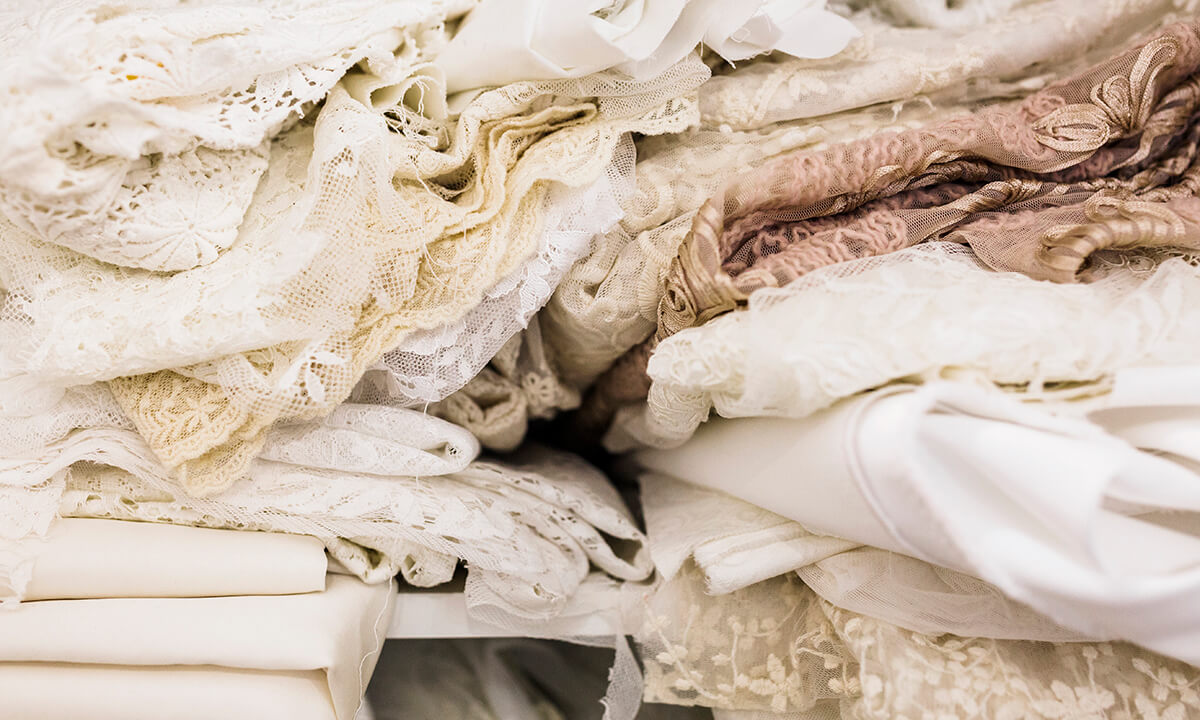
Heavily beaded or family heirloom dresses need additional support. Weight from embellishments pulls on seams when unsupported. Fragile antique lace often reacts more quickly to humidity changes. These gowns benefit most from flat storage with extra internal padding and more frequent inspections.
In these cases, attempting to preserve the wedding dress structure without professional handling can introduce risks that are difficult to reverse later.
Frequently Asked Questions
What Is The Best Way To Store A Wedding Dress?
The best way to store a wedding dress is flat inside an archival acid-free box lined with unbuffered tissue, placed in a stable indoor environment away from heat and moisture.
How Long Can A Wedding Dress Stay In Storage?
With proper wedding gown storage conditions and periodic inspection, gowns can remain stable for decades. Problems usually arise from humidity, leftover residue, or unsuitable packaging.
Should I Keep My Dress In Its Original Garment Bag?
Original garment bags are designed for short transport, not long-term storage. Most are made of plastic or treated fabric that traps moisture.
Can I Store A Wedding Dress In A Basement If It Is Dry?
Even dry basements carry seasonal humidity changes and a higher flood risk. Interior living space offers far safer long-term conditions.
When Professional Storage Becomes Practical
Many gowns contain mixed fibres, detailed embroidery, layered tulle, boning, and internal corsetry. Professional wedding dress storage services manage cleaning, structural support, humidity buffering, and proper archival packing in a controlled environment. This approach removes a high level of risk for owners who do not have stable conditions at home.
For brides who want professional care from start to finish, Love Your Dress offers preservation, cleaning, and long-term storage solutions tailored to Canadian homes and climates. Request a quote today!