
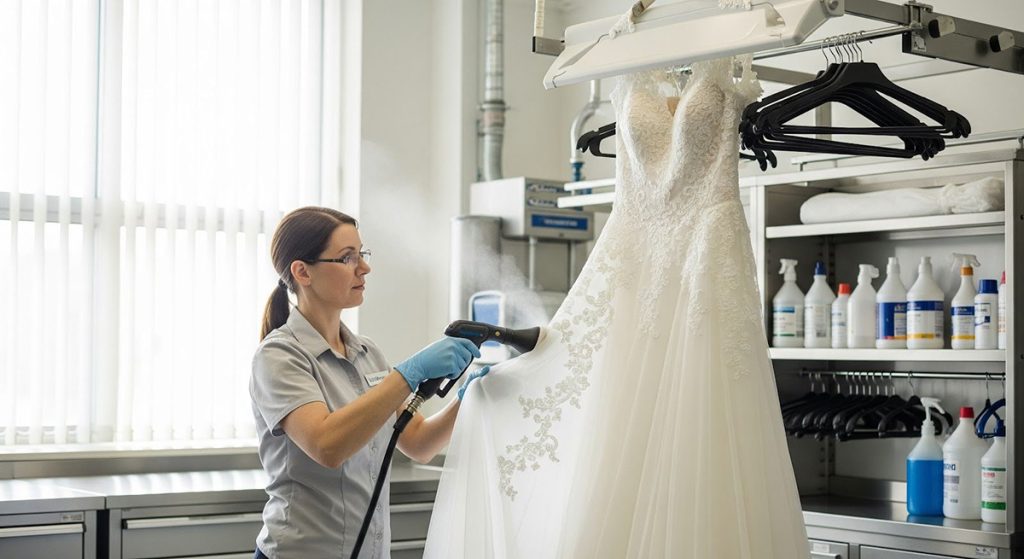
A wedding gown is not cleaned the same way as a regular garment. Bridal cleaners treat it as a delicate textile, starting with inspection, careful stain work, and slow cleaning cycles designed for fragile fabrics. This added handling explains why prices vary, even when two dresses look similar at first glance.
Understanding how much to dry clean a wedding dress starts with knowing what goes into the process and why bridal cleaning is priced differently from everyday clothing.
Wedding Dress Dry Cleaning Cost: What You Are Paying For
Professional bridal cleaning involves multiple steps that are handled manually rather than through automated systems. The price reflects time, experience, and controlled conditions rather than speed.
- Detailed inspection of seams, linings, boning, closures, and trims
- Pre treatment of visible and hidden stains before cleaning begins
- Gentle cleaning methods suited to delicate fibres
- Individual pressing and reshaping to restore the gown’s structure
- Packaging that protects the dress after cleaning
Bridal gowns are handled differently from standard garments because many require specialized workflows that account for layered fabrics, structured bodices, and delicate finishes. Services focused on wedding dress cleaning typically assess each gown individually, which is why pricing is based on hands-on evaluation rather than preset rates.
Textile care experts note that managing and preserving costumes and textiles draws on recognized museum standards in handling and care, which helps explain why bridal cleaning is more involved than typical dry cleaning for everyday wear.1
Cleaning should also be viewed separately from the purchase itself. The overall wedding dress cost often includes fittings, alterations, and accessories, while cleaning follows a different pricing model tied to labour and materials.
What Factors Influence The Cost Of Wedding Dress Dry Cleaning
When people ask what factors influence the cost of dry cleaning, the answer usually comes down to fabric composition, construction, and stain complexity.
Fabric choice plays a major role. Many gowns combine silk, satin, lace, tulle, and beading across multiple layers. Each material reacts differently to cleaning methods. Some layers must be treated separately, which increases labour time. Dresses with heavy embellishment or structured bodices often require slower handling throughout the process.
Stains also affect pricing. Spills addressed soon after the wedding are easier to remove. Stains that sit for weeks or months may require repeated treatments. Some marks only become visible once cleaning starts, especially clear liquids that darken over time.
Process choices matter as well. A cleaner who handles one dress at a time, refreshes cleaning solutions, and finishes the gown by hand spends more time per piece than a shop that processes garments in batches. That difference is reflected in the final cost.
Cleaning Versus Preservation: Quick Comparison

Some brides want cleaning only. Others prefer long-term storage designed to slow fabric aging. Preservation typically costs more because it involves additional materials and handling beyond cleaning.
| Option | What It Typically Includes | Why It Can Cost More | Best Fit |
| Cleaning Only | Inspection, stain treatment, gentle cleaning, and finishing | Labour-intensive steps and slower machine cycles | Short-term storage or resale plans |
| Cleaning Plus Preservation | Cleaning plus archival packaging using acid-free materials | Special storage supplies and additional handling | Long-term keepsake storage |
For gowns that will be stored for years, preservation may factor into decisions around an old wedding dress, especially when fabric quality or sentimental value makes replacement unrealistic.
Consumer Rights And Hidden Fees In Canada
Unexpected charges can be frustrating. In Canada, consumer protection principles require that pricing and charges be disclosed clearly before work begins. The Competition Bureau warns that certain pricing practices, such as drip pricing where additional mandatory fees are not shown up front, can mislead buyers and are considered unfair marketing.2
A written estimate that lists all charges helps avoid misunderstandings, particularly when optional services such as preservation or specialty packaging are involved.
Questions To Ask Before You Drop It Off
A short conversation before handing over your gown can prevent surprises later.
- Will my dress be cleaned individually or alongside other garments
- How do you handle mixed fabrics and layered designs
- Are stain treatments included in the quoted price
- What type of packaging is part of the service
- Can you provide a written estimate before starting
At home, loose surface debris can be gently removed by vacuuming through clean nylon mesh. This helps keep dust from settling deeper into the fabric during cleaning.
Frequently Asked Questions
How Much Is Wedding Dress Dry Cleaning?
There is no single flat rate. The cost of wedding dress dry cleaning depends on fabric type, dress volume, embellishments, and stain treatment requirements. Simple gowns generally cost less than heavily layered or detailed designs.
What Factors Influence Pricing?
Fabric sensitivity, construction complexity, and stain age are the biggest influences. Dresses that require section-by-section treatment or repeated stain work take longer to clean.
Can I Lower Wedding Dress Dry Cleaning Cost Without Cutting Corners?
Yes. Bringing the dress in soon after the wedding and identifying every spill you remember helps reduce extra treatments. Comparing written quotes from bridal specialists also makes pricing easier to manage.
A Practical Next Step
If you are still asking how much to dry clean a wedding dress, the next step is to speak with a specialist who understands bridal fabrics and construction. Request a quote from Love Your Dress today based on your dress, how it was worn, and the level of care you want.
References
- Icon. Costume and Textiles. www.icon.org.uk/conservation-hub/caring-for-your-collections/costume-and-textiles.html
Government of Canada, Innovation, Science and Economic Development Canada, Office of the Deputy Minister, Competition Bureau Canada and Competition Bureau Canada. Drip Pricing. 25 Nov. 2024, competition-bureau.canada.ca/en/deceptive-marketing-practices/drip-pricing.