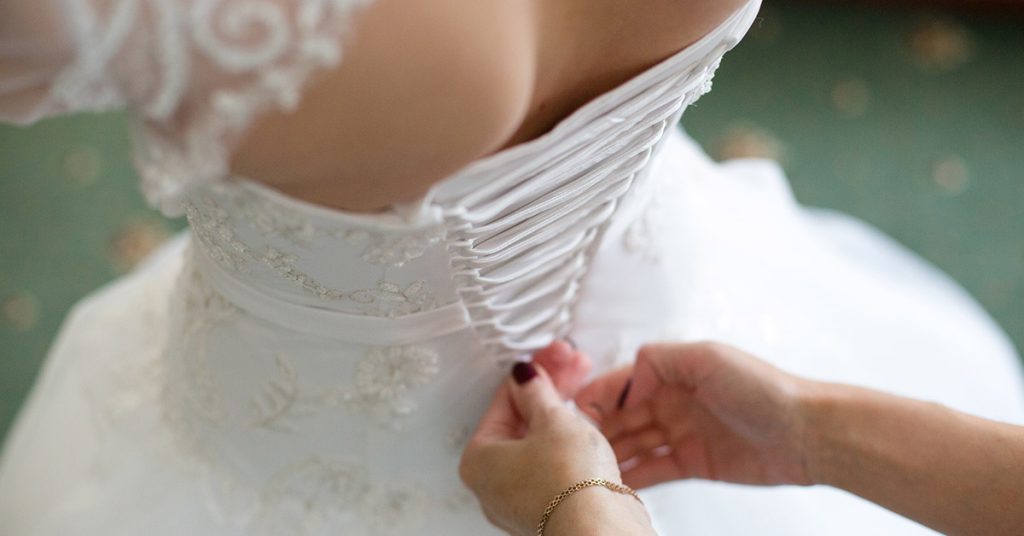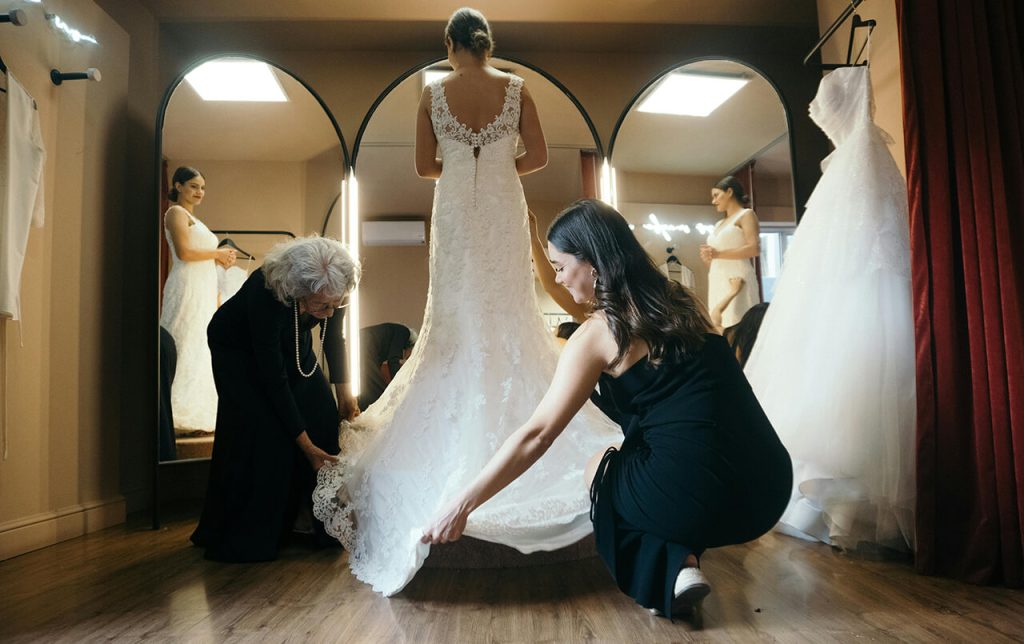

About 67% of Canadian weddings take place between June and September, which is one reason alteration calendars fill up fast in spring. A late booking can leave you with fewer appointment options, added stress, and extra fees. Most gowns also need more than one fitting, so there has to be enough room between each step. If you are wondering when to alter wedding dress plans into your wedding checklist, the safest answer is earlier than many brides expect. In most cases, booking your first fitting about six months before the wedding gives you the best chance of staying on schedule.
Start With The Full Timeline In Mind
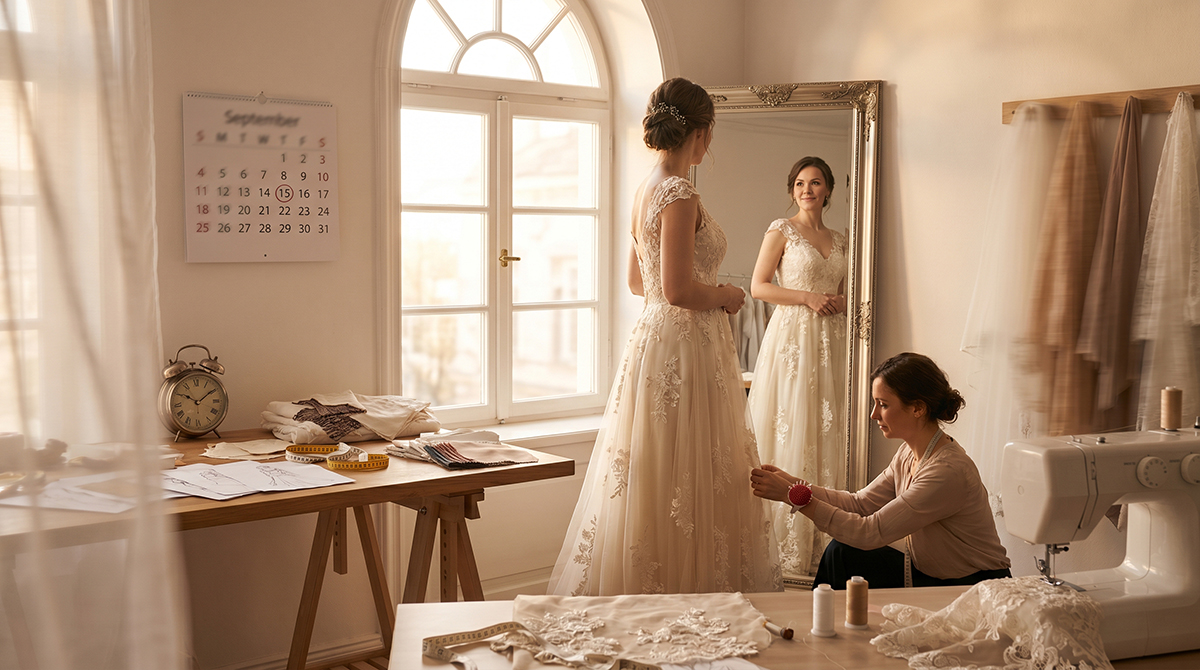
A wedding gown rarely moves from purchase to perfect fit in one quick step. The dress may take months to arrive, especially if it was made to order. After that, the alteration stage usually needs eight to twelve weeks, with room for a first fitting, follow-up work, and final preparation.
So when it comes to the bridal gown alterations timeline, months before the wedding day is your safest bet to accommodate everything. If your wedding is in peak season, calling ahead matters even more. Brides getting married in July or August often compete for the same skilled tailors at the same time.
Wedding Dress Fitting Schedule
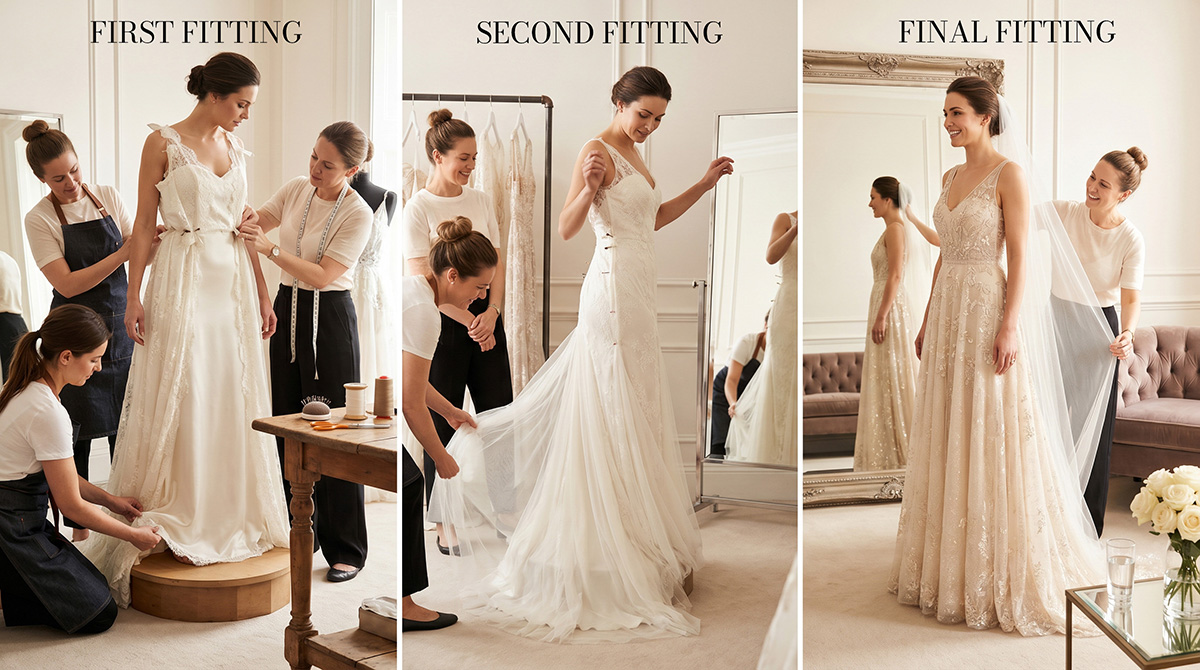
A practical fitting schedule usually includes three stages. The first appointment focuses on major changes such as hem length, side seams, bust fit, straps, sleeves, and bustle planning. The second fitting checks how those adjustments sit on the body and whether movement feels natural. The final fitting confirms the completed shape and gives you a last chance to catch small issues before pickup.
| Fitting Stage | Recommended Timing | Main Focus |
| First Fitting | About 8 to 12 weeks before the wedding | Major fit changes, hem, bustle, structure |
| Second Fitting | About 4 to 6 weeks before the wedding | Review changes, comfort, movement |
| Final Fitting | About 1 to 2 weeks before the wedding | Final check, pressing, pickup planning |
What To Bring To Bridal Gown Fitting Appointments
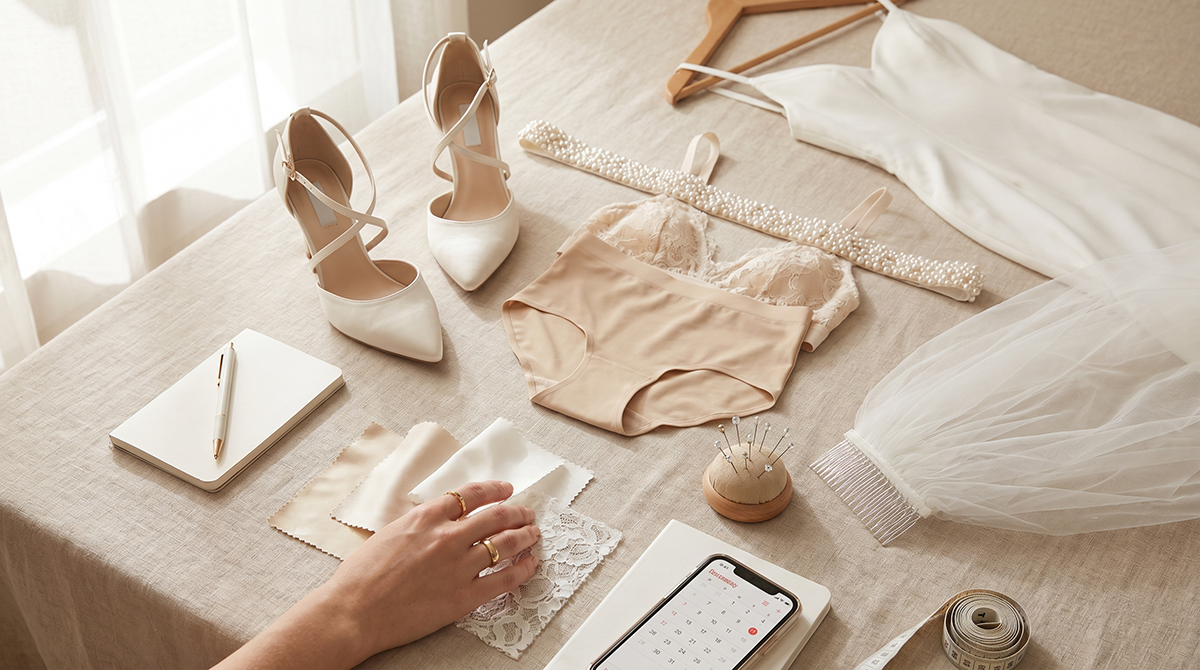
Your tailor can only fit the dress to the version of you that will actually show up on the wedding day. Small differences in shoe height or undergarments can change the hem, bust, and waist placement.
Bring these items to all wedding dress fitting appointments:
- Your wedding shoes, or shoes with the exact same heel height
- The undergarments or shapewear you plan to wear
- Any belt, overskirt, or accessory that affects fit
- A trusted person who can learn the bustle if needed
This is also the stage where dress repair may come up if there is loose lace, damaged beading, or stress on older fabric. When that happens, a tailor handling both fit changes and wedding dress repair can often manage the work more smoothly within the same schedule.
How Long Do Wedding Dress Alterations Take
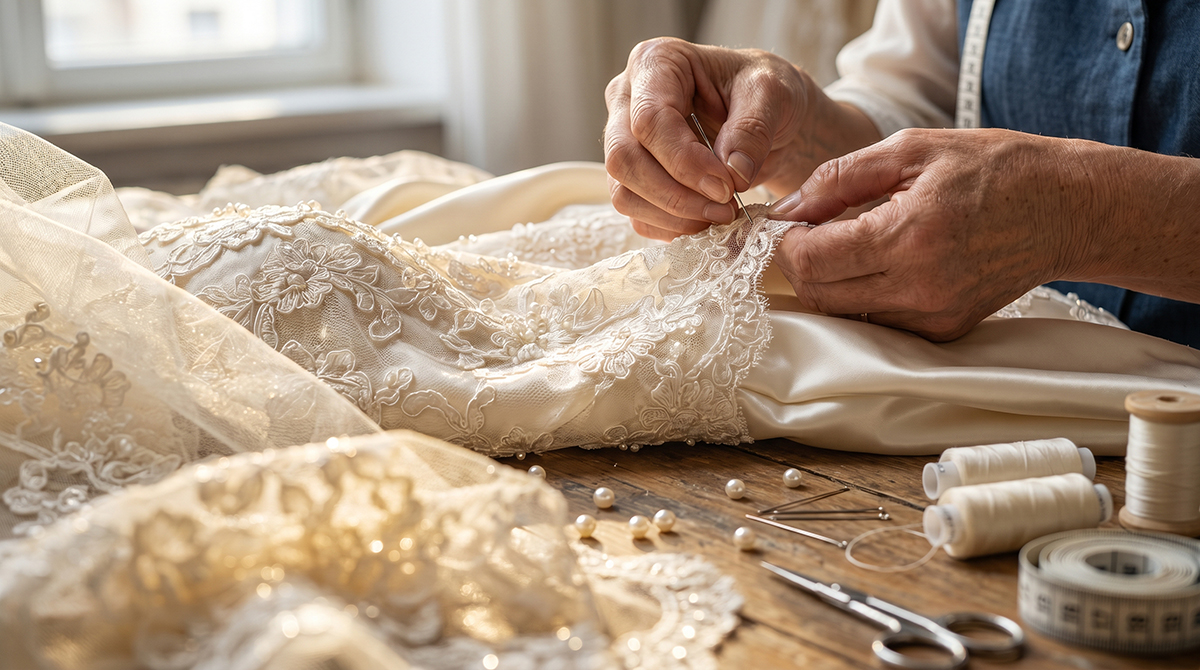
If the gown is simple, the work may move faster. If it has lace, beadwork, multiple layers, or a long train, the timeline usually stretches. The speed of alteration really depends on construction, fabric, and season.
Some fabrics are unforgiving. Satin can show every needle mark. Lace often needs handwork so the pattern continues properly after a seam is changed. Beaded gowns may require beads to be removed and sewn back by hand. A bustle also takes planning because the train has to be lifted in a way that still looks balanced once the reception starts.
Important to Know: Storage and handling matter just as much once alterations are complete. The Canadian Conservation Institute notes that damp conditions above 70% relative humidity can lead to mould, fibre shrinkage, and corrosion of metal elements in textiles.1
Book Early If Your Wedding Is In Peak Season
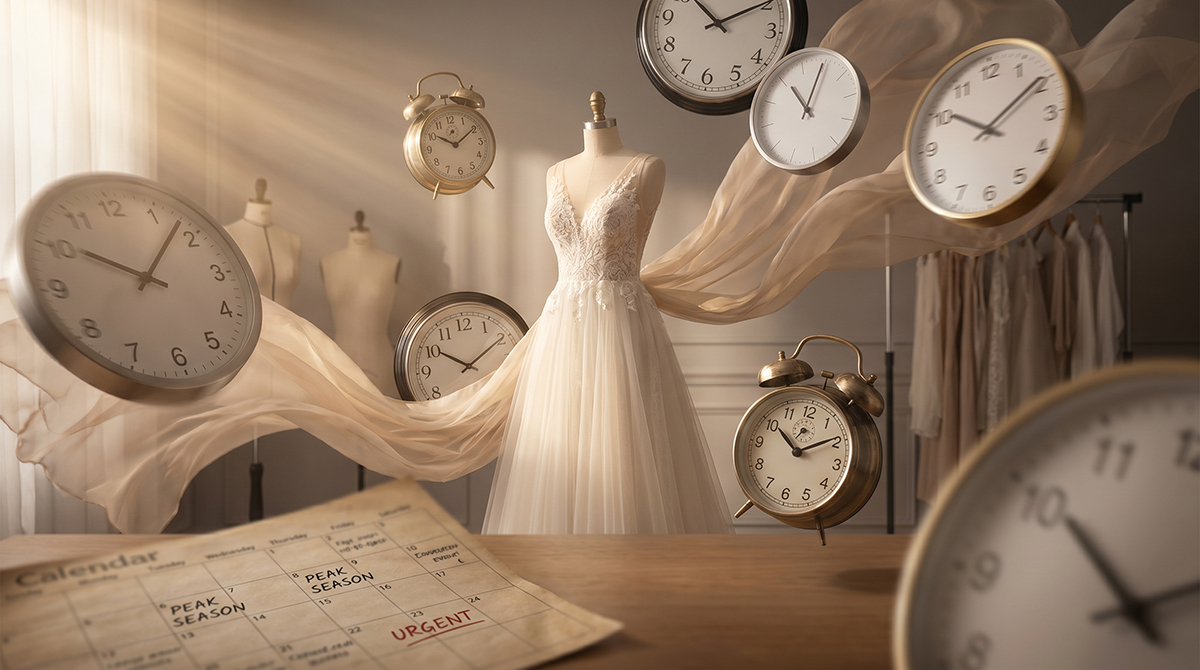
In Canada, spring alteration calendars can get crowded because summer weddings dominate the season. That affects turnaround times and appointment availability.
Book earlier than usual if:
- Your wedding is in July, August, or September
- Your gown has lace, heavy beading, or a dramatic train
- You bought a made-to-order dress with a tight delivery window
- You need custom shaping rather than simple hemming
- You want time to compare options for wedding dress alterations
A rushed schedule can also mean rush fees. Some alteration providers add extra charges when work starts too close to the wedding date.
Couture Vs. Standard Alterations Timeline
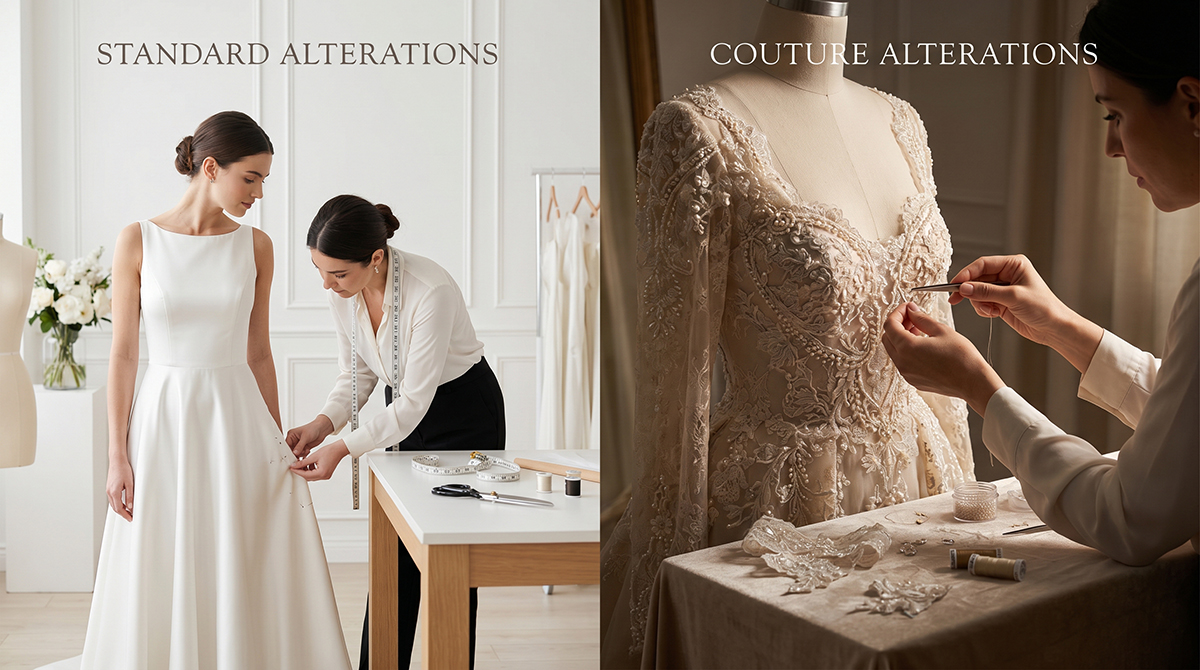
A standard gown with a plain hem and modest bodice changes may fit comfortably inside the usual eight to twelve week window. A couture gown or heavily detailed dress often needs more time because each change has to protect the original design.
That difference matters when you are deciding when to alter a wedding dress. A simple crepe gown and a fully beaded lace dress should not be planned the same way. If the gown has vintage construction, delicate silk, or hand-applied details, ask the seamstress about similar work they have handled before.
Protect Yourself Before Leaving The Dress

Alterations are a paid service, and the paperwork matters. In Ontario, services over $50 require a written contract that spells out the total amount, timing, and other terms.2 That makes it easier to confirm what was promised and when the dress should be ready.
Before leaving your gown, ask for:
- An itemized estimate
- A written completion date
- A note about rush fees, if any
- Clear pickup instructions
- A record of the agreed changes
Final Timing Advice
For most Canadian brides, the safest plan is to buy early, book the first fitting six months ahead, and expect the alteration period to begin around eight to twelve weeks before the wedding. Leave the final fitting for the last one to two weeks so the gown is checked close to the event. Bring the same shoes and undergarments every time. If your dress is detailed, vintage-inspired, or structurally complex, adding more buffer is the way to go.
Planning ahead for your fittings? Get a personalized quote from Love Your Dress based on your gown, fabric, and timeline.
References
- Canadian Conservation Institute. “Textiles and the Environment – Canadian Conservation Institute (CCI) Notes 13/1.” Canada.ca, 18 July 2025, www.canada.ca/en/conservation-institute/services/conservation-preservation-publications/canadian-conservation-institute-notes/textiles-environment.html.
- “Your Rights When Signing or Cancelling a Contract.” ontario.ca, 1 Apr. 2025, www.ontario.ca/page/your-rights-when-signing-or-cancelling-contract.