Finding the right bridal fit begins with accurate measurements. Wedding gowns rely on precise body data because most bridal fabrics have very little stretch. Even a small difference can affect how the bodice sits, how the skirt hangs, or how comfortably the dress moves during the ceremony. Bridal sizing also differs from everyday clothing, so relying on labelled sizes rarely works. Understanding measurements helps brides select the correct starting size before alterations refine the final fit.
This guide explains the measurements that matter most and how to take them correctly.
Understanding Bridal Sizing Before Measuring
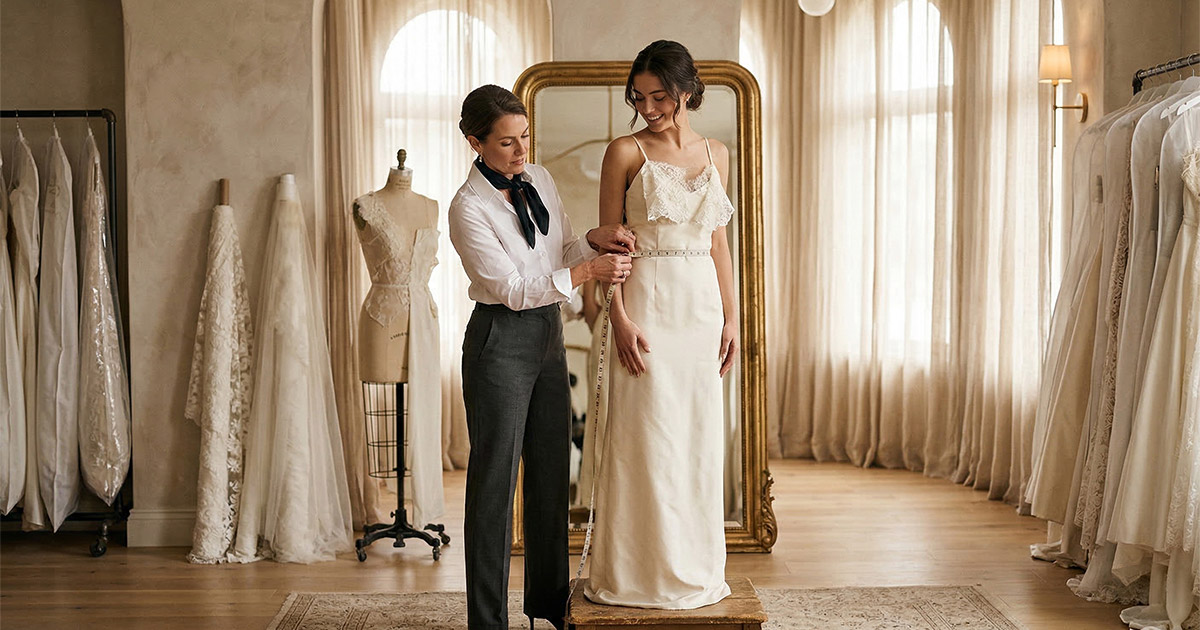
Wedding gowns rarely follow the same sizing rules as everyday clothing. In Canada, apparel sizing used to follow the Canada Standard System for Sizing Women’s Apparel, developed by the Canadian General Standards Board. The system aimed to standardize measurements across manufacturers using metric body dimensions.
That national standard was withdrawn in 2012, which means designers now rely on their own proprietary size charts.1
Because of this, a wedding dress size guide from one designer may differ significantly from another. Raw body measurements remain the only reliable reference point when ordering a gown.
Tools Needed To Measure For A Wedding Dress
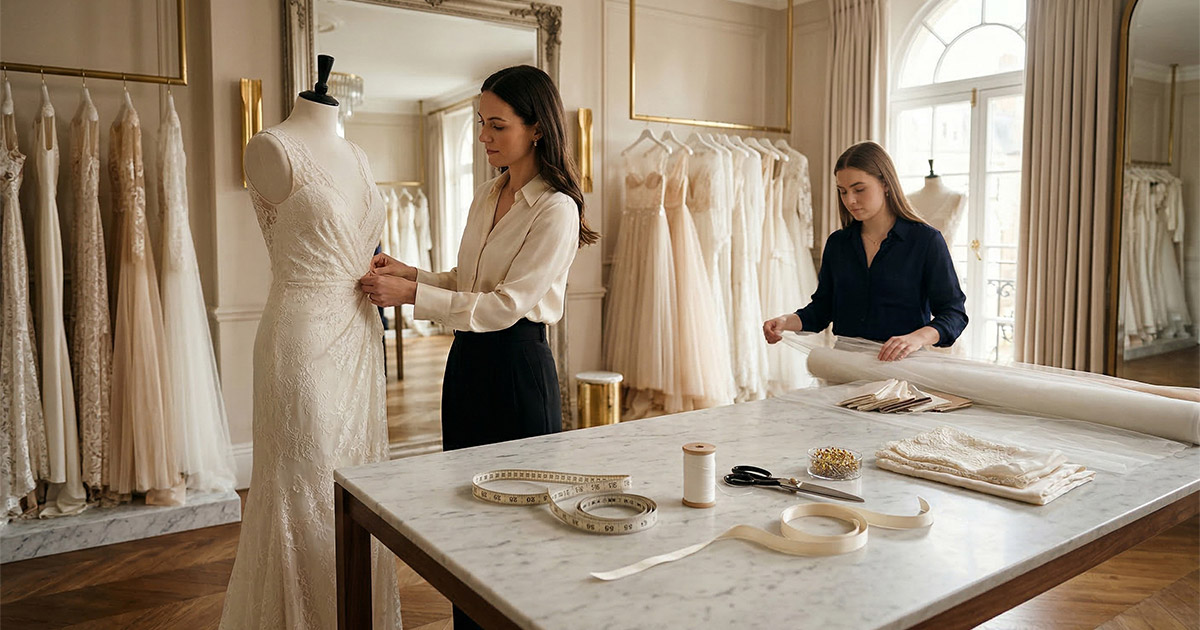
Taking accurate measurements requires the right setup. Bridal consultants use specific tools because stretchable or poorly aligned tapes can distort results.
Use the following equipment before beginning:
- Flexible non-stretch tape measure
- Full-length mirror
- Ribbon or thin cord to mark the waistline
- Assistance from another person
Professional garment construction standards recommend fibreglass or plastic-coated measuring tapes because cloth tapes can stretch over time and produce inaccurate readings.
Measurements should always be taken over undergarments rather than bulky clothing. The exact undergarments planned for the wedding day also influence the final fit, which is why many brides consider supportive pieces such as shapewear for their wedding dress before taking measurements.
Bust, Waist, Hips Measurements For Wedding Dress
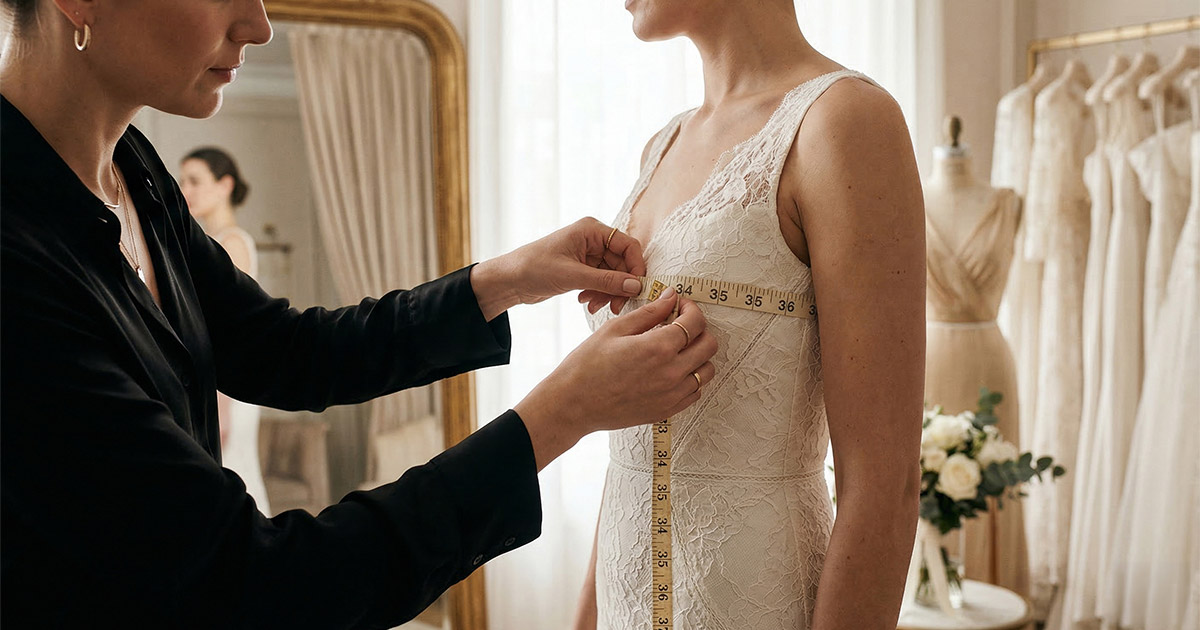
The three measurements that determine most bridal sizing are the bust, waist, and hips. Together, they form the structural foundation of a fitted gown.
Measure Bust For Wedding Dress
To measure the bust:
- Stand upright with arms relaxed at the sides
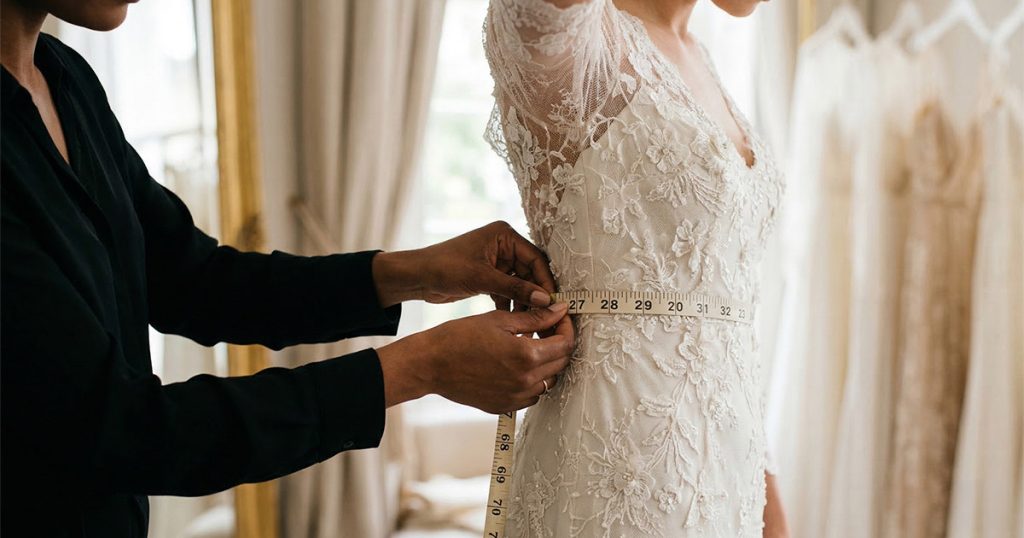
- Wrap the tape around the fullest part of the bust
- Keep the tape parallel to the floor
- Wear the bra intended for the wedding day
The measurement should pass directly across the bust apex, which is the most prominent point of the breast. Bridal professionals stress that different bras can change this measurement by several centimetres, so the correct undergarment matters.
Measure Waist For Wedding Dress
The natural waist is not the same as where many people wear everyday clothing. The correct location sits at the narrowest part of the torso.
A simple way to find it:
- Bend slightly to one side
- Identify the crease that forms in the torso
- Tie a ribbon around that location
That point becomes the natural waistline used for gown construction.
Measure Hips For Wedding Dress
Hip measurements determine how the skirt fits. This is especially important for fitted silhouettes such as mermaid or trumpet gowns.
Steps include:
- Stand with feet together
- Wrap the tape around the fullest part of the hips and seat
- Keep the tape straight and level
Most hip measurements fall about 7 to 9 inches below the natural waistline, though individual height differences can change this slightly.
Wedding Dress Size Guide Table
The following table shows how common body measurements relate to bridal sizing charts. Actual sizing varies by designer, so these figures serve as a general reference.
| Measurement Area | Where To Measure | Purpose In Dress Construction |
| Bust | Fullest part of the bust | Determines bodice shaping and dart placement |
| Waist | Narrowest part of torso | Supports the weight of the gown structure |
| Hips | Widest part of hips and seat | Controls skirt fit and movement |
| High Bust | Above bust under arms | Stabilizes strapless bodices |
| Under Bust | Below bust line | Helps determine internal bra support |
These measurements allow designers to draft patterns that align with the body’s structure.
Hollow-To-Hem Measurement of A Wedding Dress
Vertical measurements are just as important as circumference measurements. One of the most important is the hollow-to-hem length.
This measurement determines how long the gown will be once completed.
To measure hollow to hem:
- Start at the hollow of the neck between the collarbones
- Extend the tape straight down to the floor
- Stand in the shoes planned for the wedding day
Professional dressmakers emphasize that heel height must be included during measurement. If shoes are unavailable, a similar heel height should be worn during measurement to avoid incorrect hem length.
Gowns with large skirts may require the tape to follow the outward curve of the fabric rather than falling straight down.
Common Measurement Mistakes Brides Make
Even careful measurements can go wrong when certain habits interfere with accuracy.
Common mistakes include:
- Measuring over thick clothing
- Pulling the tape too tightly
- Standing with feet apart during hip measurement
- Holding the breath while measuring the waist
- Measuring alone without checking tape alignment
A relaxed posture produces more reliable results. Slight changes in stance can add several centimetres to a circumference measurement.
Why Accurate Measurements Matter For Wedding Dresses
Wedding gowns behave differently from everyday clothing. Many fabrics used in bridal design offer very little elasticity.
Silk, satin, and lace typically provide almost no stretch, which means the gown cannot compensate for inaccurate measurements.
The Canadian Conservation Institute notes that delicate textile fibres can weaken or distort when subjected to excessive strain.
Precise measurements help prevent structural stress on seams, boning, and internal support layers. A well-fitted bodice distributes the weight of the gown evenly across the waist and torso.
Alterations And Final Fit
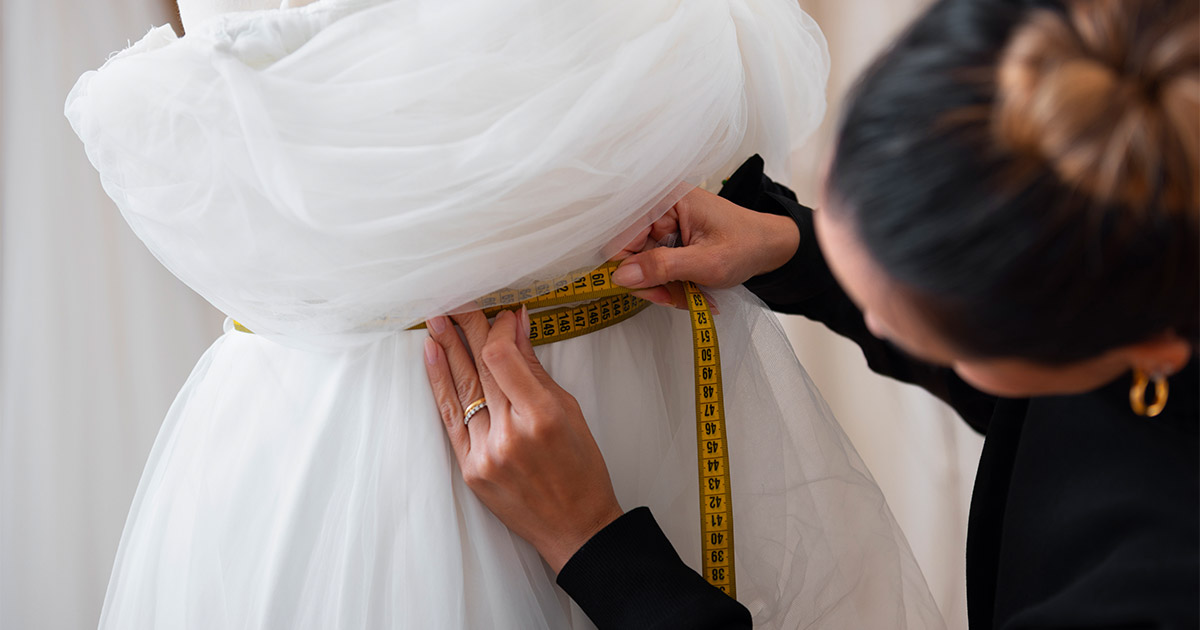
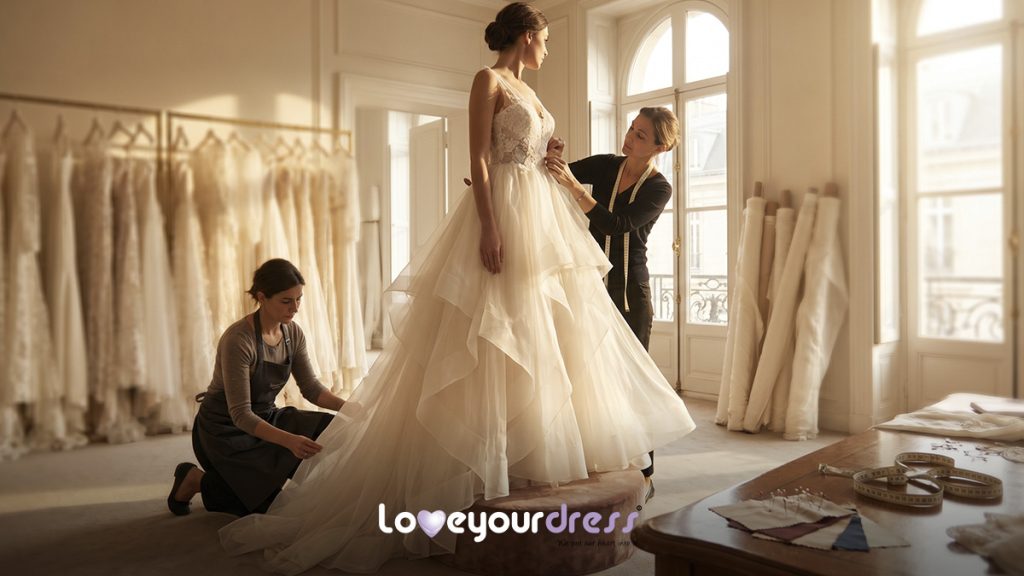
Even with careful measuring, most bridal gowns still require tailoring adjustments. This process usually unfolds in three stages:
- First fitting: major structural adjustments
- Second fitting: evaluation of comfort and mobility
- Final fitting: finishing touches before the wedding
Wedding dress alteration timelines typically range from eight to twelve weeks.
During the planning process, brides often think ahead about what happens to the gown after the celebration. Some later explore options for preserving an old wedding dress or maintaining the fabric condition over time.
How We Can Help
Accurate measurements are only the first step in preparing a wedding gown. Professional cleaning, preservation, and restoration keep the fabric in excellent condition before and after the ceremony.
Love Your Dress works with delicate bridal fabrics, structured gowns, and detailed embellishments that require careful handling. Our specialists understand how bridal materials behave and how to maintain their shape, colour, and integrity.
If you need professional support with cleaning, preservation, or restoration, request a quote today!
References
- Matteis, Stephanie, et al. “These Jeans All Say They’ll Fit a 34-inch Waist. Here’s Why Most of Them Won’t.” CBC, 25 Nov. 2022, www.cbc.ca/news/business/marketplace-jeans-testing-1.6658819.