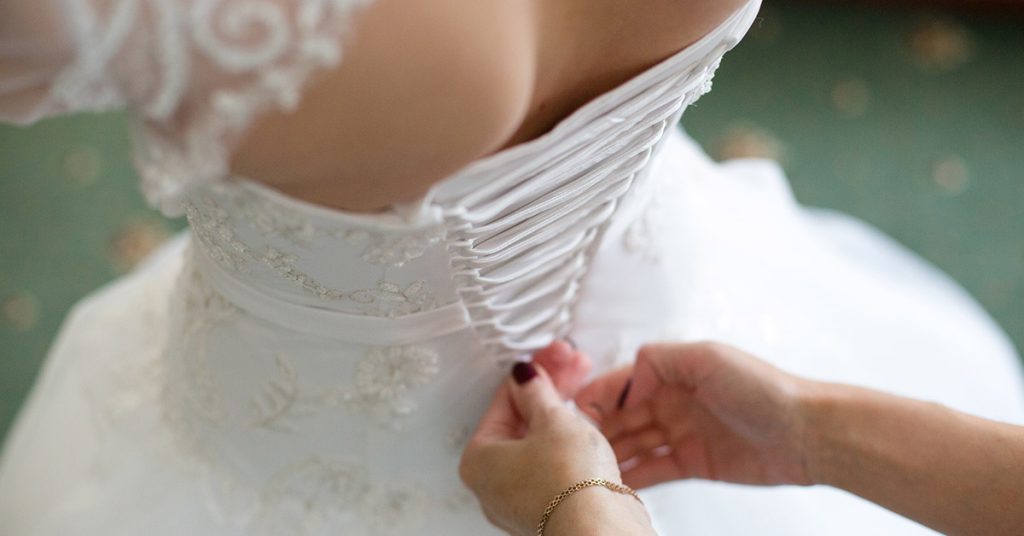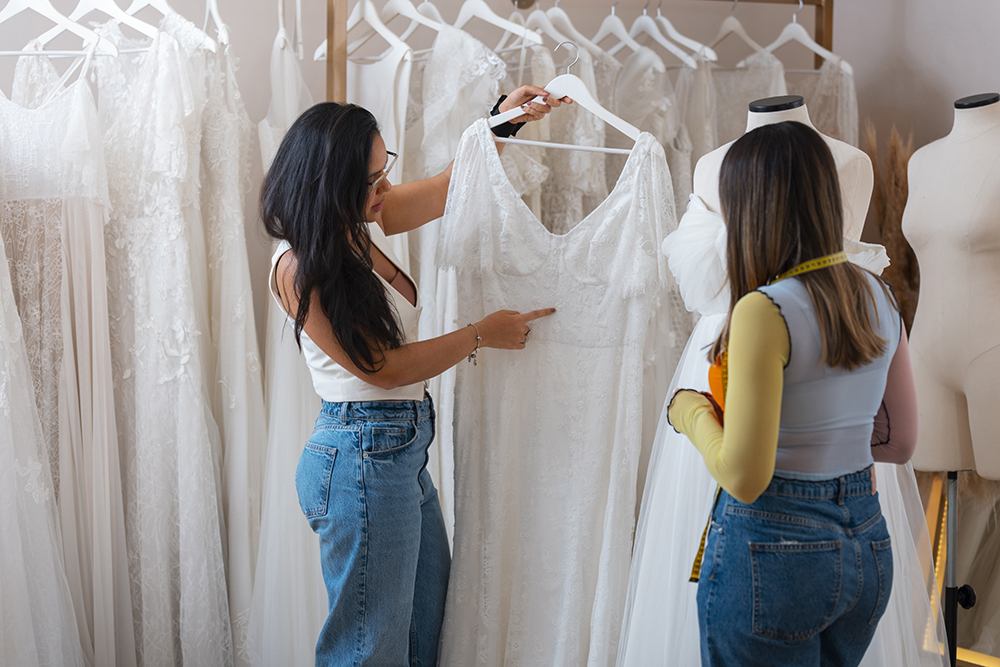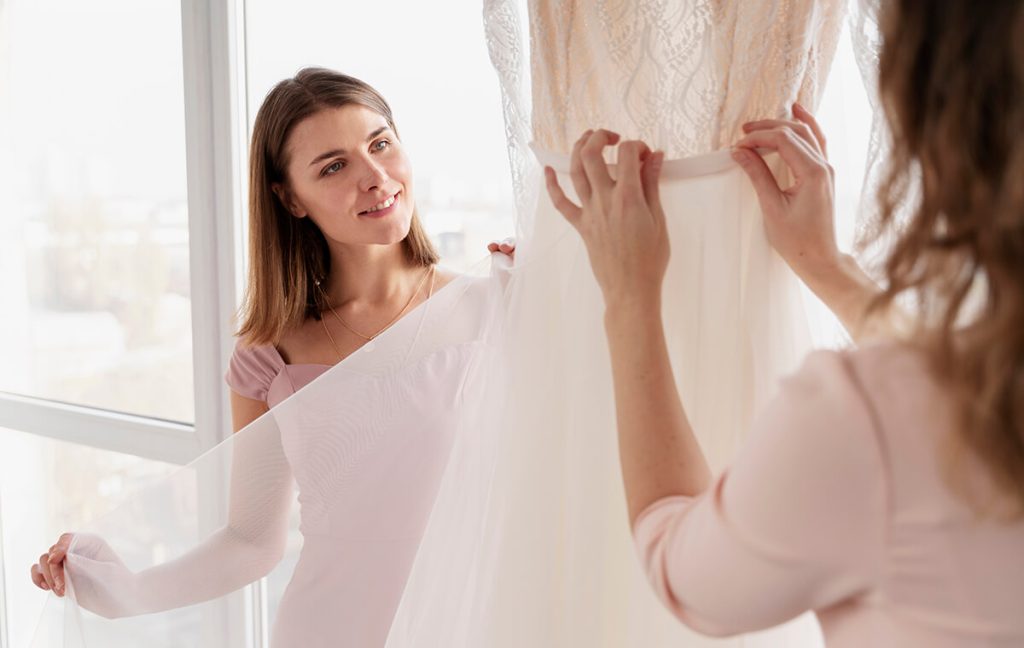
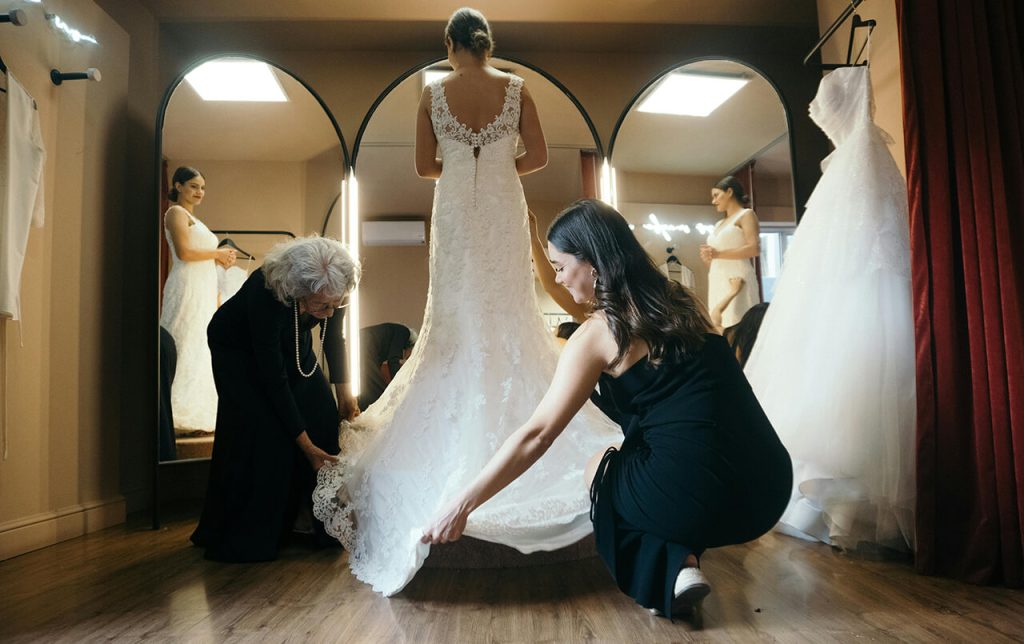
A wedding dress fitting is the stage where your gown is adjusted to your body. During this appointment, the fitter checks how the dress sits at the bust, waist, and hips, and how it behaves when you walk, sit, and turn. They focus on fit elements that affect comfort, movement, and how the gown holds its shape throughout the day.
Your outfit should make those checks easier. This guide covers what to wear, what to avoid, and what to bring so your appointment goes smoothly.
What You Should Be Wearing
Choose clothing that comes off without rubbing against your face, hair, or hands. A button-up shirt, zip hoodie, or loose top works well because you can remove it quickly. Soft pants or leggings are practical. Avoid stiff fabrics and anything with bulky hardware that could catch on lace, beading, or tulle.
If possible, avoid tight clothing that leaves deep lines on your skin. Those marks can make it harder for the fitter to judge how the bodice is sitting against your natural shape.
Wear Undergarments That Help The Fit
When deciding what to wear to a dress fitting, start with what goes under the gown. Undergarments affect how the bodice sits, especially when the dress includes boning, lining, or built in structure.
Bring a properly fitted bra that matches the level of support you plan to wear on the wedding day. Seamless fabrics help prevent texture from showing through lighter silks or satins. If you plan to wear shapewear, wear the same piece to every fitting. It changes body volume and affects where adjustments are marked.
Dress construction also matters. Some types of wedding gowns rely heavily on internal structure, and heavier fabrics can lose their intended shape without the right foundation garments underneath.
If you are still deciding what undergarments to commit to, bring a few options. The fitter can quickly tell you which one gives the cleanest line through the waist and hips.
Shoes And Posture Set The Hemline
Bring your wedding shoes to every fitting. Hem length depends on footwear and posture, so heel height must be factored into alterations. Even a small difference can change how the hem falls and how the skirt moves when you walk.
A well-fitted hem stays level with the floor. Your shoes act as the reference point for that line, which is why consistency matters from one appointment to the next.
Stand the way you normally stand. Fitters adjust for posture nuances. Standing unnaturally straight can throw off back waist length and lead to rework later.
If you do not have your final shoes yet, bring a pair with the closest heel height you can find. Avoid guessing based on a photo online, since footwear height can vary even within the same style category.
Keep Fabrics Clean And Easy To Handle
Minimize makeup, self-tanner, and oily skincare products. According to the Canadian Conservation Institute, most textiles are absorbent and porous, which means they can readily become soiled or stained.1 Perspiration can turn into underarm staining over time, and cosmetic oils can leave marks that are difficult to remove from delicate fabrics.
Hair placement also matters. Hair worn down can block the fitter’s view of shoulder seams and necklines. If you plan to wear a veil, bring it along so the fitter can see how its weight affects the back of the gown.
Try to avoid scented products. Fragrances can linger on fabric and may cause discomfort for others in the fitting space.
If you want to be extra cautious, bring a clean cloth or small towel. Some brides like having something to place between their skin and the gown while the fitter checks the neckline placement.
What Not To Wear To A Bridal Fitting
If you are planning what to wear to a bridal fitting, start by removing anything that could snag the fabric or alter your proportions.
- Remove rings, watches, bracelets, and necklaces before handling the gown
- Avoid heavy denim, exposed zippers, and rough outerwear
- Skip padded bras or extra layers unless you will wear them on the wedding day
- Choose light, low-contrast underwear so the fitter can clearly assess the dress
These small details matter because bridal fabrics are often delicate, and snagging can happen quickly if something catches on lace or embellishments.
What To Bring To Every Appointment
Consistency across fittings helps maintain accurate adjustments. Bringing the right items also saves time and prevents rushed decisions.
| Item | Why It Matters |
| Wedding shoes | Determines hem length and affects posture |
| Foundation garments | Allows accurate bust and waist adjustments |
| Accessories | Shows how veils or belts affect drape |
| Note-taking tools | Helps track alteration details |
| Support person | Assists with movement checks and feedback |
If you are bringing someone with you, keep it to one or two people. Too many opinions can make the appointment stressful, and fittings work best when decisions are clear.
Static Cling in Dry Canadian Winters
Dry winter air can increase static cling, especially with synthetic fabrics. Static can cause the skirt to cling to your legs, which makes it harder to assess balance and movement.
If static becomes an issue during a fitting, these steps can help.
- Increase humidity in the room if possible
- Lightly mist the air or garment with water
- Apply fragrance-free lotion to your skin
- Slide a metal hanger gently over the fabric
It is also a good idea to avoid wool sweaters or heavy fleece before your appointment. Those fabrics can generate more static when you change in and out of the gown.
Fitting Timing And Consumer Rights in Canada
Alterations usually follow a predictable timeline. The first fitting often happens 8 to 12 weeks before the wedding. A second fitting follows around 4 to 6 weeks out. The final fitting typically takes place about 2 weeks before pickup.
In Canada, alteration services fall under consumer protection rules. According to the Government of Ontario, it’s illegal for a business to give false information about themselves or the product or service they offer under the Consumer Protection Act.2 You are generally entitled to a clear estimate before work begins. If no guaranteed price is given, final costs usually should not exceed the estimate by a reasonable margin unless you approve additional work.
If something feels unclear, ask questions on the spot. A good bridal dress alteration team will explain what is being changed and why, especially for areas like the bodice, zipper, straps, and bustle.
What To Wear: Wedding Dress Shopping Versus A Fitting
Shopping appointments focus on style selection. Fit is often simulated using clamps. A fitting is different. It is where the gown is shaped to your body, with attention to movement, posture, and how the dress performs when worn for hours.
Remember: Shopping is mostly about comfort and quick changes. A fitting is about accuracy.
What To Wear When Trying On Wedding Dresses
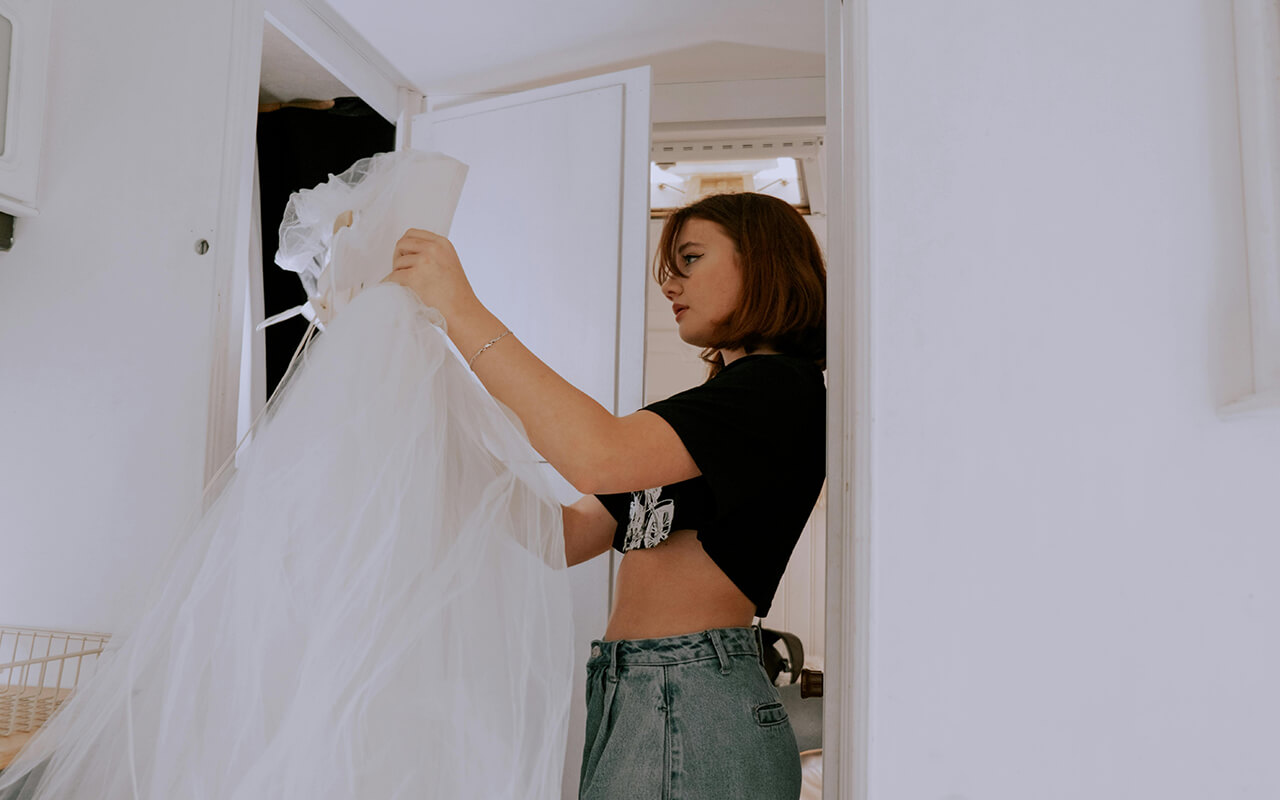
Treat this process like a practice run for later fittings. Wear undergarments similar to what you plan to use. Bring shoes or a heel height close to your final choice. Keep jewellery off so nothing scratches the fabric.
You should also consider the hairstyle. Even if you are not doing your wedding hair yet, pulling it back helps you see the neckline clearly and makes it easier to picture the final look.
If you are already thinking ahead, caring for an old wedding dress often starts with keeping the gown clean and protected throughout fittings.
Final Checklist Before You Leave The Appointment
Before you walk out of the fitting room, do a quick self-check.
- Walk normally and take a few steps up and down if possible
- Sit down to see if the bodice feels restrictive
- Confirm whether straps, cups, or support elements will be added
- Ask when your next fitting is scheduled
- Confirm what you need to bring again next time
These quick steps can prevent small issues from turning into bigger ones later.
Final Thoughts
Knowing what to wear to a wedding dress fitting helps your fitter get accurate measurements and helps you feel more comfortable during the appointment. Stick to clean, easy clothing that changes quickly. Wear the undergarments you plan to use on the wedding day. Bring your shoes every time, since heel height affects the hem.
Keep cosmetics and scented products minimal. Bridal fabrics can absorb oils and stain more easily than people expect. If you treat the fitting like a technical appointment, you will get a better final result.
Ready for your next fitting? Get a quote from Love Your Dress.
References
- Canadian Conservation Institute. “Caring for Textiles and Costumes – Preventive Conservation Guidelines for Collections.” Canada.ca, 22 Mar. 2024, www.canada.ca/en/conservation-institute/services/preventive-conservation/guidelines-collections/textiles-costumes.html.
- “Your Rights Under the Consumer Protection Act.” ontario.ca, 1 Apr. 2025, www.ontario.ca/page/your-rights-under-consumer-protection-act.